Tuesday, September 19, 2023

Alexander pope - Rape of the lock

RAPE OF THE LOCK


"The Rape of the Lock" was first published anonymously in 1712 before it was reworked and republished in 1714 by Alexander Pope. It is a mock-epic or mock-heroic poem.
  • According to you, who is the protagonist of the poem Clarissa or Belinda? Why? Give your answer with logical reasons.
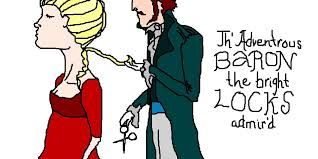
The protagonist of the poem, Belinda, is a wealthy and beautiful young woman who travels to Hampton Court for a day of socialising and leisure. Her remarkable beauty attracts the attention of the Baron, who snips off a lock of her hair in his infatuation.

The Pope has presented Belinda as a complex character. He has presented her in different roles and under different shades, some are satirical, others ironical but all entertaining. The character of Belinda has created much controversy since the publication of the poem. Some critics consider her treatment fair while others are unfair.


There are several aspects of the personality of Belinda as portrayed by Pope in The Rape of the Lock. It will be wrong to regard her purely as a goddess, or as a pretty spoiled child, or as a flirt. She is a combination of all three and yet much more than such a combination. We see her in many different lights. We see her as a vamp, an injured innocent, a sweet charmer, a society belle, a rival of the sun, and a murderer of millions. She has a Cleopatra- like variety. However, the reality lies in between these two extremes we can discuss her character as below.


Belinda is the heroine of the story. It is her character around whom the story of the whole poem is woven. We see her sleeping till noon and her awakening by her lap dog “Shock”. We are present at her toilet and watch the progress of the sacred rites of pride. Then we see her proceeding from the Thames River to the Hampton Court. Then her smiting looks upon the well dressed youths that crowd her. Pope compares Belinda to the sun and suggests that it recognizes in Belinda a rival. Belinda is like the sun not only because of her bright eyes and not only because she dominates her special world. She was as beautiful as every eye was fixed on her alone. She is like the sun in another regard:

“Bright as the sun, her eyes the gazers strike.

And, like the sun, shines on all alike.”


Belinda is a model who more specifically represents the fashionable, aristocratic ladies of Popes age. Such social butterflies in the eighteenth century were regarded as petty triflers, having no serious concern with life, and engrossed in dance and gaiety. Belinda’s fall indicates the decadence of her class. Through her, Pope describes the flippancy and depravity of the English society of his day.


Belinda is a central character of the play. Opening lines of the poem make it very clear to the readers that Belinda is the central character and heroine of this mock-epic. Belinda is a complex character in Rape of the Lock. Her character is presented under different roles and shades. Her depiction is both satirical and ironic but with a tincture of entertainment. There are lots of controversies among critics about character of Belinda since the publication of the Rape of the Lock. Some consider Belinda’s treatment fair while others consider it unfair.


Famous Character Among English Literature:


Belinda’s character is an outstanding portrait by Pope in his mock epic The rape of the lock. Among all the other heroines in English Literature like Shakespeare’s Caleopetra Ophillia Emillia; Fielding’s Pameila; Eliot’s Maggi; Belinda had been the favourite character of Pop. The way Pope pays attributes to Belinda’s beauty with his pen; it seems that he has been enamoured with his own creation. Pope describes her paragon of beauty and wittiness: the goddess of beauty, the nymph, the fair, the rival of the sun’s beams. Pope’s Belinda resembles Shakespeare’s Cleopatra. Like her, she is a paragon of beauty and the winner of men of her age.


“Law In these labyrinths his slaves detains,

And mighty hearts ate held in slender chains”


Belinda is a perfect creation of wit and beauty. Pope describes the way she paints and decorates herself with ornaments, diamonds, powders, patches, perfumes and puffs in front of a mirror. Then she leaves to win the heart of lovers.

  • What is beauty? Write your views about it.

Beauty:

Alexander Pope’s “The Rape of the Lock” offers an ironic glance of court life in the 18th-century, highlighting societies centralized on beauty and appearance. The poem’s centre of focus is around the experience of a beautiful woman, Belinda, who lost her lock of remarkable hair to a nobleman known as the Baron. As the poem starts to go along, it steadily becomes sillier and sillier and the characters collapse into a battle over the lock. Pope added Clarissa’s speech into the poem, which argues that women spend much time on their looks rather than thinking to become a better person and serve society. The main thesis of Pope was that this kind of self-obsession is useless and radically nonsense. However, the poem’s conclusion seems to suggest that true beauty would be of some value, but if it becomes the subject of poetry, thus it achieves a kind of literary immortality.
Pope mocks Belinda’s obsession with her beauty by comparing it with a hero which is about to go into battle. She beautifies herself all day and appears at court as insignificant. When she lost the lock of her hair, her furious reaction allowed Pope to poke fun at her vanity.  Alexander Pope kept defending the intellectual and moral authority of his female characters through the wisdom of Clarissa’s speech, demonstrating female intellect and morality. He further questioned the wisdom of such a maternal system by outlining the Baron’s behaviour as immoral. His fellow male courtiers are foolish. They allowed him to suggest that a maternal society is both unfair and unfounded.


It is important to note that at the time the Pope wrote the poem it was generally believed that women were both intellectual and moral inferiors of men. The Pope seems to say that vanity itself is folly, but to appreciate great art, thus it can be said that one should be careful not to underestimate the role of beauty in inspiring great works like poetry. By using a mock epic into the poem, he not only glamped up the whole scenario by giving it huge fairy dust powder, but also entertained the question of responsibility in the poem.


According to me: beautiful face is not important but beautiful heart is most important.
  • Find out a research paper on "The Rape of the Lock". Give the details of the paper and write down in brief what it says about the Poem by Alexander Pope.

Pope’s transformations are numerous, striking, and loaded with moral -implications. Pope’s use of the mock -epic genre is intricate and exhaustive. TheRape of the Lock is a poem in which every element of the contemporary scene conjures up some image from epic tradition or the classical world view, and the pieces are wrought together with a cleverness and expertise that makes the poem surprising and delightful. loaded with moral -implications. Pope’s use of the mock -epic genre is intricate and exhaustive. TheRape of the Lock is a poem in which every element of the contemporary scene conjures up some image from epic tradition or the classical world view, and the pieces are wrought together with a cleverness and expertise that makes the poem surprising and delightful.


Work cited :


Shah, Umama. “Majors Themes in Rape of the Lock by Alexender Pope.” Academia.edu, 24 Oct. 2014, https://www.academia.edu/8949032/Majors_themes_in_Rape_of_the_Lock_by_Alexender_Pope.

  • Write your views about the significance of hair. Is it symbolic?

Belinda's lock of hair comes to symbolise the absurdity of the importance afforded to female beauty in society.
Belinda’s lock of hair comes to symbolise the absurdity of the importance afforded to female beauty in society. Pope offers a hyperbolically metaphorical description of the two locks in Canto II, humorously framing the locks as alluring enough to virtually incapacitate any man who looks at them. The locks are “labyrinths” in which Love “detains” “his slaves” by binding their hears with “slender chains,” thus poking fun at the idea that Belinda’s beauty is truly powerful enough to make such a deep impact. This absurdity only grows as the poem progresses and after the Baron has snipped of Belinda’s lock. Under the influence of Umbriel, Thalestris laments the loss of the lock as the symbolic loss of Belinda’s reputation in society, exclaiming, “Methinks already I your tears survey, / Already hear the horrid things they say.” In Pope’s day, the respectability of a woman in society depended upon her having a spotless reputation and being perfectly virtuous, and, in particular, sexually pure. Thalestris then is essentially saying that the loss of Belinda’s lock is a rupture which damages all of the rest of her beauty, and the Baron’s having taken it in so intimate a fashion compromises the idea that she is chaste, and that people will think she in some way allowed him to violate her body. Obviously, this makes very little sense, allowing the Pope to satirise the idea that beauty and virtue are so closely related. The lock’s final ascension into the heavens is the most absurd part of the whole thing, and Pope’s choice to cap off the whole poem with the transparently silly idea that the lock is too precious to remain on earth, that no mortal deserves to be so “blest” as to possess it, emphasises the ridiculous amount of emphasis placed on female beauty in society.

The Lock:


The lock of Belinda's hair referred to in the title is also a powerful symbol both of vanity and of the power of female beauty over men. According to the poem, Belinda has nourished her locks, meaning she has trained them to be at their most fabulous, hanging temptingly down her neck. As such, they are portrayed as "Chains" or even "Sprindges," or snares, to entrap an unsuspecting young beau. When Pope initially introduces the locks, he says they have been nourished "to the destruction of mankind," meaning they have great power and have been groomed in such a way as to have even more power. They are doing their job—in fact, they do it too well, causing the Baron to fall so completely in love (as it turns out later) with Belinda that he simply has to have her locks, or one of them, as a souvenir. This results in the entire battle and, indeed, the resentment between the two that comes as a result of it.


Saturday, September 16, 2023

Post - Truth


Defination of the post - truth


Donating circumstances in which people are more likely to accept an argument based on their emotions and beliefs, rather than one based on facts.

Some Examples of Post-Truth In India:

The world has entered an era of post truth politics


Ways of knowing’ or ‘epistemology’

Quest for truth and knowledge forms the foundation of civilizations. Not merely knowing the truth, but knowing, recording and passing it on to next generation is at the core of human civilizations.


Before civilization

Millions of years ago when we were not humans we didn’t care about ways of knowing. We knew things but we didn’t care much about how to know or how to record knowledge and pass it on. We were busy with surviving and procreating. But even then, we made cave paintings and tried to create knowledge and also communicate. But it wasn’t until we learned to speak, read and write that is not until language was formed that theories of knowledge came into existence. The history of human civilization, ways of knowing is too vast for this space. To keep it short let’s start at the time when many civilizations had already emerged on the face of earth each making its own progress in field of culture, language, art, architecture etc., few things people understood but still many things they did not. Whatever they did not understand they attributed it to God or nature. Why did the earth shake? Gods must be angry. Religion had been invented and belief or faith in a certain higher order was the basis of knowledge during this time. Then came the scientific revolution and enlightenment.

Scientific Revolution and Enlightenment

This changed everything. It was the seed of the modern world we live in today. Man decided to reject the superiority of God and religious orders, and took to knowledge and reason to be the master of his own destiny. Positivism emerged in 18th century Europe with philosophers like Auguste Comte, JS Mill, Herbert Spencer who started looking at the world in very different ways owing to the scientific revolution Europe had witnessed through 16th and 17th century. Science, rationality, atheism, critical thinking, rejection of idealism, abstracts were some of the ethos that formed the basis of positivism. Only that knowledge was considered true by positivists which could be seen, heard, touched, observed, quantified and replicated in a scientific way. Everything else like human emotions, experiences, romanticism were rejected from the realm of knowledge creation.

Post-modernism

Positivism remained the basis of knowledge creation and knowing and understanding the universe for a long time, unless critical realism, post modernism and subaltern studies like post-colonial theories, feminist epistemology emerged. These branches rejected the supremacy of objectivity, quantification, verification and foregrounded subjectivity and lived realities of every human. They rejected the idea that there is such a thing as ‘whole truth’ or that there is anything to be known or capable of knowing by humans or that there is only one proper way to know.

Post-modernism to post-truth and post-truth politics

Now comes post-truth a time when subjective realities is stretched too far to prove and disprove whatever knowledge and narrative suit the populist sentiments. Anything and everything is accepted as truth so long as a formidable leader with mass appeal is able to touch a chord with the masses, sway them with great oratory skills and convince them to accept their narrative without questioning.

While Donald Trump is considered the trend setter, Boris Jhonson is the latest star of post-truth politics and our Prime Minister is not far behind. 

Post-truth Politics in India

BJP’s 2014 elections was largely based on the post-truth narrative that Congress party has no contribution to independent India that during the entire period from independence to 2014 they only looted India as did the Mughals and British. They started a hate campaign against Congress leaders particularly of the Nehru Gandhi family, which continues till date, maligning their characters, integrity, personal life and even death.


 In the photo, he was seen sitting on a sofa, and on the handle of the sofa was his daughter sitting holding her father’s hand. When I saw that photo, my first response was that he should delete it as it was susceptible to misuse and misinterpretation if used without the context and if people don’t know the woman in the picture was his daughter. An art perfected by BJP’s Amit Malviya. He doesn’t feel any moral guilt in using photos of women and men who are long dead to peddle a fake narrative about Nehru. Such is the loss of ethics and morals in this post-truth politics. ...


Thank you 😊

Wednesday, September 13, 2023

John Dryden's essay on dramatic poetry

An Essay of Dramatic Poesy

     by John Dryden 

Dryden


John Dryden (1631-1700) was an English poet, critic, and playwright active in the second half of the 17th century. As a poet, Dryden is best known as a satirist and was England's first poet laureate in 1668. In addition to satires, Dryden wrote elegies, prologues, epilogues, odes, and panegyrics. His most famous poem is Absalom and Achitophel (1681). Dryden was so influential in Restoration England that the period was known to many as the Age of Dryden.

• Samuel Johnson calls John Dryden “The father of English criticism.”

• Sir Walter Scott calls John Dryden “Glorious John.”

In the summer of 1665 when Dryden and his wife fled plague-stricken London for the countryside taking along only a few books, the theatres

had been re-opened for only a few years and there were exciting new critical ideas from France to be debated. There, in a quiet rustic setting, Dryden went fishing and wrote theory (An Essay of Dramatic Poesy), paraphrasing and quoting directly from Corneille's Prefaces that lay open on the desk. Never having been to France, Dryden knew the French dramatist's plays not from theatre, but from the study.

An Essay of Dramatic Poesy:

In this Essay, Dryden has put forward his criticism of dramatic poetry.

Aim :

In his address, "To the Reader" prefixed to the Essay, Dryden says that his aim was, "to vindicate the honour of our English writers, from the censure of those who unjustly prefer the French before them."

However, the real aim is much wider than this. The Essay is also an attempt to evolve the principles which ought to guide us in judging a play, as well as an effort to discover the rules which could help a dramatist in writing a good play.

The Essay is also a contribution to two current controversies:

The comparative superiority of the ancient and the modern. Dryden demonstrates the superiority of the moderns over the ancients, and also the superiority of contemporary (Restoration) English dramatists over the Elizabethan dramatists. 
 The comparative merits and demerits of blank verse and rhyme for dramatic purpose. Dryden upholds the superiority of rhymed verse.

The Essay have five critical idea :

1. The relative merits of ancient and modern poets.

2. Whether the existing French school of drama is superior or inferior to the English.

3. Whether the Elizabethan dramatists were in all points superior to those of Dryden's time.

4. Whether plays are more perfect in proportion as they conform to the dramatic rules laid down by the ancients.

5. Whether the substitution of rhyme for blank verse in serious plays is an improvement.

In Dryden's Essay of Dramatic Poesy ( 1668 ) the four persons who carry on the dialogue are Eugenius , Crites , Lisideius , and Neander 

Crites argues in favour of the ancients:

They established the unities; dramatic rules were spelled out by Aristotle which the current-and esteemed-French playwrights follow; and Ben Jonson-the greatest English playwright, according to Crites-followed the ancients' example by adhering to the unities.

Crites:

He supports the ancients.
The Moderns are dependent upon the ancients.
The Moderns do not follow the three units.
The Ancients are the law-givers and they should be the models for other writers to follow.
Eugenius favours the moderns over the ancients, arguing that the moderns exceed the ancients because of having learned and profited from their example.

Eugenius:

Although the Moderns have profited from the Ancients, they now excel the ancients through their work.
The Ancients have not followed the unities.
The Ancients did not have any sense of the division of the play.
The Ancients plays lack originality.
The Ancients did not include emotions like Love in their plays. 


But some may have a preference for ancient over the modern time due to the nature-friendly people. However, most people love this modern life more than ancient one due to its fast movement, ease of availability, and all kinds of opportunities. Both the world has their pros and cons.

Modern life is easier than life in the past. I definitely agree that modern life is easier than life in the past. The increased use of technology, rising standards of living, and improved healthcare have combined to make our lifestyles, at least in the first world, luxurious compared to lifestyles of the past.

Example:

Nowadays some people discuss, they say that because of smartphones people lose memory. They say past generations remember lots of mobile numbers but the new generations and even those generations aren't able to remember numbers and other things.

They complain that smartphones do all these things . That's why people lose their memory. 

Different way of doing things isn't always bad. Accepting new things is a sign progressive society. 


We generally say every new generation is updated.

But this argument is not relevant, we can say we remember many other different things instead of mobile numbers. We are using memory in a different way. This is not regressive. 


Paper based work is hard to manage and web version is easy to manage things.


Changes of modern time make life more easier. 


Lisideius argues that French drama is superior to English drama, basing this opinion on the French writer's close adherence to the classical separation of comedy and tragedy. For Lisideius "no theatre in the world has anything so absurd as the English tragicomedy..."

Lisideius:

He favours French plays.
According to him, the French plays follow the unities properly.
Their plots are simple, not complicated like the English plots.
He criticises the English plays for mixing tragedy and comedy.
French plays are more authentic.
They prefer emotions over action/plots violence.
They write their dialogues in rhyming verse.
Neander favours the moderns but does not underestimate the ancients. He also favours English drama and has some critical -things of French drama.

Neander criticises French drama essentially for its smallness:

its pursuit of only one plot without subplots; its tendency to show too little action; its "servile observations of the unities…dearth of plot, and narrowness of imagination" are all qualities which render it inferior to English drama.

Main Points: 

The appreciation of the worth of the striving, nature-imitating, large scope of tragicomedy and Shakespeare over the static perfection of the ideal-imitating Classical/French/Jonsonian

drama.

A dramatic act is defined as " an imitation with the aim to delight and to teach, and is considered a just and lively image of human nature representing its passions and humours for the delight and instruction of mankind."

The idea of decorum in the work of art is emphasised.


Thank you 😊

Monday, September 11, 2023

William Wordsworth's Daffodils

 🌸 William Wordsworth 


William Wordsworth (1770–1850) was an English poet and one of the central figures in Romanticism. Much of his poetry was inspired by the dramatic landscapes of the Lake District, and his work did much to alter public perceptions of that part of England.

📚major works :

Lyrical Ballads, with a Few Other Poems (1798)
"Simon Lee"
"We are Seven"
"Lines Written in Early Spring"
"Expostulation and Reply"
"The Tables Turned"
"The Thorn"
"Lines Composed A Few Miles above Tintern Abbey"
Lyrical Ballads, with Other Poems (1800)[dubious – discuss]
Preface to the Lyrical Ballads
"Strange fits of passion have I known"[49]
"She Dwelt among the Untrodden Ways"[49]
"Three years she grew"[49]
"A Slumber Did my Spirit Seal"[49]
"I travelled among unknown men"[49]
"Lucy Gray"
"The Two April Mornings"
"Nutting"
"The Ruined Cottage"
"Michael"
"The Kitten at Play"
Poems, in Two Volumes (1807)
"Resolution and Independence"
"I Wandered Lonely as a Cloud" Also known as "Daffodils"
"My Heart Leaps Up"
"Ode: Intimations of Immortality"
"Ode to Duty"
"The Solitary Reaper"
"Elegiac Stanzas"
"Composed upon Westminster Bridge, September 3, 1802"
"London, 1802"
"The World Is Too Much with Us"
"French Revolution" (1810)[50]
Guide to the Lakes (1810)
"To the Cuckoo"
The Excursion (1814)
Laodamia (1815, 1845)
The White Doe of Rylstone (1815)
Peter Bell (1819)
Ecclesiastical Sonnets (1822)
The Prelude (1850)


🌸Daffodils Poem Summary, Notes And Line By line Analysis In English By William Wordsworth:

Introduction:
‘Daffodils’ or ‘I wandered lonely as a cloud’ is a notable Romantic poem written by William Wordsworth. Based on one of a stroll the poet took himself, this poem brings out the thoughts and feelings he had experienced then through the daffodils he had seen. 


Explanation of the Stanzas:

Stanza 1:

I wandered lonely as a cloud

That floats on high o'er vales and hills,

When all at once I saw a crowd,

A host, of golden daffodils;

Beside the lake, beneath the trees,

Fluttering and dancing in the breeze.

The poem begins with the persona comparing themself to a cloud that wandered lonely ‘o’er vales and hills’. This line hints at the solidarity that encompassed the persona. All of sudden, however, the persona sees a group of daffodils ‘Beside the lake, beneath the trees’, swaying with the breeze. 


Stanza 2:

Continuous as the stars that shine

And twinkle on the milky way,

They stretched in never-ending line

Along the margin of a bay:

Ten thousand saw I at a glance,

Tossing their heads in sprightly dance.

Continuing on like the never-ending stars, the daffodils seemed to stretch forever. At just a mere glance, the persona could spot ten thousand daffodils, dancing under the sun. 


Stanza 3:

The waves beside them danced; but they

Out-did the sparkling waves in glee:

A poet could not but be gay,

In such a jocund company:

I gazed—and gazed—but little thought

What wealth the show to me had brought:

The waves from the ocean near the daffodils danced just like them, except, the daffodils were far better than them in their joy. The persona, revealed to be the poet himself, states that he couldn’t help but partake in their infectious happiness. The persona goes on to state how they had stared at the daffodils, unblinking, without realising their worth then. 


Stanza 4:

For oft, when on my couch I lie

In vacant or in pensive mood,

They flash upon that inward eye

Which is the bliss of solitude;

And then my heart with pleasure fills,

And dances with the daffodils.

In the final stanza, the persona is reminiscent and wistful. Lying on their couch languorously when broody or thoughtful, the image of the daffodils conjured up in their mind. The peacefulness and the solitude they had offered would instant fill their heart with pleasure- their heart would thus go dance along with the daffodils he had seen once. 


🌸 Conclusion :

This is a beautiful poem that captures nature at its finest. Each line reveals how man and nature and entwined with each other and how nature had the power even to eradicate the loneliness present in human beings. 

Thank you 😊

Sunday, September 10, 2023

Metaphysical poetry - fiipped learning

 Metaphysical poets 


History of metaphysical poetry:

 Metaphysical poetry emerged in the 17th century in England. It's characterized by its exploration of complex and abstract themes, often blending the spiritual and earthly. Key figures include John Donne and George Herbert. Metaphysical poets used intricate metaphors and conceits to convey their ideas, making their work intellectually stimulating.

The history of metaphysical poetry dates back to the 17th century in England. This literary movement is primarily associated with a group of poets who wrote during this period. Here's a brief history:


1. **Origins:** The term "metaphysical poetry" was first coined by Samuel Johnson in the 18th century to describe a specific style of poetry that was practiced by a group of poets in the previous century. The poets associated with this style didn't identify themselves as metaphysical poets during their lifetimes.


2. **17th Century:** Metaphysical poetry reached its peak during the 17th century. Notable poets from this period included John Donne, George Herbert, Andrew Marvell, Henry Vaughan, and others. They explored complex themes, often drawing elaborate metaphors (conceits) and employing intellectual wordplay.


3. **Themes:** Metaphysical poets delved into various themes, including the nature of love, the relationship between the physical and spiritual worlds, the transitory nature of life, and the human condition. Their poems often combined the spiritual and the sensual, reflecting the religious and philosophical debates of their time.


4. **Later Influence:** While the popularity of metaphysical poetry waned in the 18th century, its influence on subsequent generations of poets, including the Romantic poets of the 19th century, can't be overstated. The innovative use of language and exploration of complex themes continued to inspire poets and scholars.


5. **Modern Reception:** Metaphysical poetry remains a subject of study and admiration in the modern literary world. Scholars and readers continue to appreciate the intellectual depth and linguistic creativity of these poets.


In summary, metaphysical poetry emerged in the 17th century in England, characterized by its unique style and exploration of complex themes. It had a significant impact on subsequent literary movements and continues to be studied and appreciated today.


  • What is metaphysical poetry?
Metaphysical poetry is a 17th-century literary style characterized by intellectual depth, complex metaphors (conceits), paradoxes, and exploration of profound philosophical and emotional themes.

  • Characteristics of metaphysical poetry :

Metaphysical poetry is characterized by several distinctive features that set it apart from other forms of poetry. Here are some of its key characteristics:


1.*Conceits:** Metaphysical poets often employ elaborate and extended metaphors known as conceits. These conceits draw unexpected and sometimes strained comparisons between two seemingly unrelated things, encouraging readers to contemplate deeper meanings.

2. **Intellectual Depth:** Metaphysical poetry is known for its intellectual exploration. Poets delve into complex philosophical, religious, and metaphysical themes. They engage with abstract concepts and challenge readers to think deeply about these subjects.

3. **Paradox:** The use of paradoxical statements and ideas is common in metaphysical poetry. Poets present contradictions and conflicting elements to provoke thought and reflection, encouraging readers to reconcile seemingly opposing notions.

4. **Emotional Complexity:** Metaphysical poetry often explores intricate and multifaceted emotions, particularly in the context of love, longing, and human relationships. The poems can be deeply introspective and emotionally charged.

5. **Wit and Wordplay:** Metaphysical poets are known for their clever wordplay, puns, and metaphysical conceits. They use language in intricate ways to convey their ideas, making the poems intellectually stimulating.

6. **Meditative Tone:** Many metaphysical poems have a meditative and reflective tone. They encourage readers to contemplate life's mysteries, the nature of existence, and the relationship between the physical and spiritual realms.

7. **Innovative Language and Style:** Metaphysical poets often experiment with language and style. They use unconventional structures and meters, and their poems can be characterized by their inventiveness and originality.

Notable metaphysical poets from the 17th century include John Donne, George Herbert, Andrew Marvell, and Henry Vaughan. Their works continue to be celebrated for their intellectual depth and imaginative use of language.

  • Examples of metaphysical poems:
Certainly, here are a few examples of metaphysical poems from notable poets of the 17th century:


1. **John Donne - "A Valediction: Forbidding Mourning"**
   - This poem uses the conceit of a compass to explore the enduring nature of love, even when physically separated.

2. **George Herbert - "The Collar"**
   - In this poem, Herbert explores the inner conflict between his earthly desires and his devotion to God, using vivid metaphors.

3. **Andrew Marvell - "To His Coy Mistress"**
   - Marvell uses witty language and metaphysical conceits to make a persuasive argument for seizing the moment in love.

4. **Henry Vaughan - "The Retreat"**
   - Vaughan reflects on the simplicity and tranquility of a rural retreat, using nature as a metaphor for spiritual renewal.

5. **John Donne - "Death Be Not Proud"**
   - In this famous sonnet, Donne addresses death personified, challenging its power and permanence.

These poems showcase the distinct characteristics of metaphysical poetry, including the use of metaphors, paradoxes, and exploration of complex themes. Each poet brings their unique style and perspective to the genre.

Thank you 😊🙏🏻

Friday, September 8, 2023

Classroom activities on Macbeth

 Hello.. it's Asha Rathod hear, I'm in m.a sem 1 in department of English.. our syllabus is Click hear

Our paper name is literature of Elizabethan and restoration period in first we studied chapter name is Macbeth by William Shakespeare...

Dilip barad sir was given worksheet of related about Macbeth Click hear

1.soliloquy analysis
- explain the soliloquy from Shakespeare's Macbeth tomorrow, tomorrow...tale told by an idiot, full of sound and Fury, signifying nothing.' Provide insights into its context, significance, and it's impact on the character of Macbeth.

Answer:


In this soliloquy from Shakespeare's play "Macbeth," Macbeth is reflecting on the futility and meaninglessness of life. He starts with the famous lines, "Tomorrow, and tomorrow, and tomorrow," which emphasize the endless and repetitive nature of time. He likens life to a "tale told by an idiot," suggesting that life is like a meaningless story narrated by someone who lacks understanding. 

The phrase "full of sound and fury" describes the chaotic and noisy nature of life's events, while "signifying nothing" underscores Macbeth's belief that all these events ultimately have no purpose or significance.

This soliloquy occurs in Act 5, Scene 5, after Macbeth has become consumed by guilt and paranoia due to his ruthless pursuit of power. His wife, Lady Macbeth, has already died, and his grip on the throne is slipping. This soliloquy reveals Macbeth's deep despair and nihilistic outlook, showing how his ambition has led him to a dark and empty place. It's a pivotal moment in the play as it marks the culmination of Macbeth's tragic downfall and highlights the consequences of his ruthless actions.

In summary, this soliloquy reflects Macbeth's realization of the futility of life and the emptiness of his ambitions, illustrating the profound impact of his actions on his character, leading him to a state of despair and hopelessness.

2. The great chain of being
- define the concept of the" great chain of being " as it relates to Shakespeare's "Macbeth "How does this concept influence the characters and themes in the play?

Answer:


The "Great Chain of Being" was a concept during Shakespeare's time that portrayed a hierarchical order of the universe. It placed God at the top, followed by angels, humans, animals, and inanimate objects, all arranged in a structured order. Each being had a specific role and place in this cosmic hierarchy.


In "Macbeth," the concept of the Great Chain of Being is essential. Macbeth's actions disrupt this natural order. When he kills King Duncan to take the throne, he goes against the divine right of kings, which was seen as God's appointed order. This action leads to chaos in the play's world. Nature becomes disturbed, symbolized by strange occurrences like storms and animals behaving unnaturally.

Characters in "Macbeth" are deeply influenced by this concept. Macbeth's ambition drives him to break the Chain of Being, leading to his descent into madness. Lady Macbeth's desire for power and her manipulation of her husband also challenge this order.

Themes like ambition, fate, and the consequences of disrupting natural order are central to the play, all linked to the Great Chain of Being. It illustrates that when individuals try to upset the established order, it often results in tragedy and chaos, as seen in Macbeth's downfall and the overall turmoil in the play.


3. Film Adaptation Analysis:

- Choose a film adaptation of Shakespeare's Macbeth  (or mention a specific adaptation by name) and explain why you believe it is the best adaptation. Discuss its fidelity to the source material, directorial choices, and any unique interpretations that make it stand out.

Answer:

 Roman Polanski's adaptation of "Macbeth" stands out as one of the best because it maintains fidelity to the source material while infusing it with a unique, gritty, and psychologically intense interpretation. This approach makes it a compelling and memorable cinematic rendition of Shakespeare's timeless tragedy.

One of the standout adaptations of Shakespeare's "Macbeth" is Roman Polanski's 1971 film version. This adaptation is notable for several reasons:


1. **Fidelity to the Source Material:** Roman Polanski's adaptation remains remarkably faithful to Shakespeare's original text, preserving the dialogue and key plot elements. This fidelity helps retain the essence and power of Shakespeare's language and storytelling.


2. **Directorial Choices:** Polanski's direction adds a visceral and gritty dimension to the story. He explores the raw and brutal aspects of the play, emphasizing the violence and psychological descent of the characters. This approach creates a sense of unease and tension that complements the dark themes of the play.


3. **Unique Interpretations:** One of the unique aspects of Polanski's adaptation is his exploration of the psychological effects of violence and ambition. He delves into the psychological trauma experienced by Macbeth and Lady Macbeth, making their characters more complex and human. This interpretation adds depth to their descent into madness and guilt.


4. **Cinematic Techniques:** The film's cinematography and use of the natural Scottish landscape contribute to its visual appeal. The remote and desolate settings mirror the isolation and chaos of the characters' lives, enhancing the overall atmosphere.


5. **Strong Performances:** Jon Finch and Francesca Annis deliver powerful performances as Macbeth and Lady Macbeth, respectively. Their portrayal of the characters' emotional turmoil and moral decay is compelling and haunting.


4. Feminist reading;

- Define what a Feminist Reading of a literary text involves. Can you apply this approach to analyze the character of Lady Macbeth in Macbeth ? Explain how her character can be viewed from a feminist perspective.

Answer:


"Feminist Reading" of a literary text involves analyzing the text through a feminist lens to examine how it portrays, challenges, or reinforces gender roles, stereotypes, and power dynamics. It seeks to explore the representation of women, their agency, and how the text comments on broader issues of gender equality and societal expectations.


When applying a feminist perspective to the character of Lady Macbeth in Shakespeare's "Macbeth," several key aspects can be considered:


1. Challenge to Traditional Gender Roles: Lady Macbeth defies traditional gender roles by actively encouraging and participating in her husband's quest for power, which involves murder. This challenges the conventional portrayal of women as passive and subservient.


2. Ambition and Power: Lady Macbeth's unapologetic ambition and her desire for power are central to her character. Her determination to achieve her goals, even through immoral means, challenges the idea that women should not aspire to positions of authority or assertiveness.


3. Manipulation and Influence: Throughout the play, Lady Macbeth wields significant influence over her husband, Macbeth. She uses her persuasive skills to goad him into action, showcasing her ability to shape events and decisions, which goes against the stereotype of women as mere bystanders.


4. Psychological Complexity: A feminist reading might delve into Lady Macbeth's psychological journey. Her descent into guilt and madness as a result of her actions can be seen as a commentary on the psychological toll women faced when deviating from societal norms and expectations.


5. Consequences of Defiance: Lady Macbeth's ultimate demise can be interpreted as a commentary on the consequences of challenging patriarchal norms and pursuing power. Her character serves as a warning about the potential costs of women asserting themselves in a male-dominated world.


In summary, a feminist analysis of Lady Macbeth in "Macbeth" highlights her defiance of traditional gender roles, her ambition and quest for power, her manipulation and influence, her psychological complexity, and the consequences of her actions. Her character can be viewed through a feminist lens as a complex exploration of the challenges and complexities faced by women who dared to challenge societal norms and pursue their desires in a patriarchal society.


Thank you

Tuesday, September 5, 2023

TEACHERS DAY CELEBRATION

Happy Teachers Day

Hello everyone , my self Asha Rathod, i'm a student of department of english in mkbu university of bhavnagar, we are going to celenration of vertual teachers day so as a part of them i'm going to make one short video lecture about the poem which was written by Robert burns.you can watch my in youtube.click hear


you can also give quize and get certificate by giving quize.click hear for quize 

i also upload this video in ted ed you can use this link for watch video click hear

Happy learning

thank you😊

Saturday, September 2, 2023

Photography workshop


 Helllo everyone my self Asha Rathod, I'm studying in department of English (M.A) at Maharaja krishnkumar University of Bhavnagar, Gujrat.

   On 18 August, 2023 we held photography workshop at department of English..at 12 o clock we gathered in sem 1 class... honourable our head Dilip barad and dr.kaushik ghelani sir was their Nd department of life science students also

First of all we welcomed our guest then some of basic knowledge given by kaushik sir... let's look at about photography workshop

Imagination: An Art of Seeing

Photography Workshop


Workshop Highlights:

  • Aesthetic Photography:
Dive into the aesthetics of photography and discover how to infuse your work with artistic flair.
  • Make your eyes a camera
  • Learn how to see things.
  • Rule of Third:
This is a fundamental guideline in photography and other visual arts that involves dividing an image into nine equal parts by using two equally spaced horizontal lines and two equally spaced vertical lines. 

Rule of Thirds, a fundamental technique for composing visually appealing images.

  • The Golden Point: The subject should seize the viewer's central focus.


#Within the sphere of domesticity, wildlife thrives.

This snapshot demanded my ardor, as the subject was initially reticent. Gradually, tranquility enveloped him. The harmonious coexistence of domesticated creatures and humanity breathes life into this tableau. Kaushik sir's discerning eye underscored the need to fill the negative space below.

  • Symmetry: Here, we encounter the mirrored visage of the subject.


Venturing onto the campus, I embarked on capturing symmetrical beauty. Geometric contours converged, etching an indelible impression.
Symmetry is a powerful and visually pleasing compositional technique in architectural photography. It involves creating a balanced and harmonious composition by aligning elements of the architecture in a way that reflects one side onto the other, either horizontally or vertically. 

  • Geometric Shapes:

These are some rules which are important for photography.

Our newfound knowledge was put to practical use as we roamed the university campus, channeling our creativity through our mobile camera lenses. Each photo was a testament to our unique perspective and creative flair.


In this perpetual quest for knowledge, wisdom becomes the compass. Embracing the mantle of a student remains indispensable, irrespective of the path chosen. Our sagacious mentor emphasized that true photographic odysseys unfurl only once our archives shed their vestiges.

Embarking on an inaugural escapade, we travelled the Department and campus. To our astonishment, diversity of fauna, insects, and trees wonders unfolded before us. We immersed ourselves in the symphony of nature, an orchestra composed of shutter clicks.
This session proved a trove of enlightenment. Profound gratitude extends to Kaushik sir, Vaidehi mam, and Dilip sir, who kindled this luminous voyage.

With heartfelt thanks.


Paper 206: The African Literature- Presentation

 Paper 206:  The African Literature-  Presentation  Youtube Video :-