Wednesday, April 24, 2024

Paper No: 108 - American Literature - Assignment

  Assignment- Paper No: 108


This Blog is an Assignment of Paper no.108 American Literature. In this assignment, I am dealing with the topic of Transcendentalism: A Movement.


Information:

Name: Asha Rathod

Paper 108: American Literature

Subject Code: 22401

Topic Name: Transcendentalism: A Movement

Batch: M.A. Sem-2 (2023-25)

Roll No: 3

Enrollment No: 5108230038

Email Address: asharathod1451@gmail.com

Submitted to: Smt. S. B. Gardi, Department of English, MKBU


Transcendentalism: A Movement

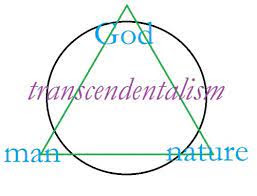
Transcendentalism

  Transcendentalism is a philosophical movement. It looks like various aspects. Also going beyond the idea of Romanticism.

Transcendentalism To go above and beyond the limitation of the senses and everyday experiences.

* we can go beyond by depending on our intuition rather than on reason and logic.

Key words: Simplicity but it's not simple.

which does not have an answer.

The keyword for transcendentalism is simplicity.

Transcendentalism - A movement 
  • Transcendentalism is a 19th-century movement of writers and philosophers in New England

  • who were loosely bound together by adherence to an idealistic system of thoughts.

  • Based on the belief in the essential unity of all creation, the innate goodness of man.

  • And the supremacy of insight over logic and experience for the revelation of the deepest truths.

what is Transcendentalism 

It’s all about spirituality. Transcendentalism is a philosophy that began in the mid-19th century and whose founding members included Ralph Waldo Emerson and Henry David Thoreau. It centers around the belief that spirituality cannot be achieved through reason and rationalism, but instead through self-reflection and intuition. In other words, transcendentalists believe spirituality isn’t something you can explain; it’s something you feel. A transcendentalist would argue that going for a walk in a beautiful place would be a much more spiritual experience than reading a religious text.

*Major Transcendentalist Values*

 The transcendentalist movement encompassed many beliefs, but these all fit into their three main values of individualism, idealism, and the divinity of nature.

 Individualism

Perhaps the most important transcendentalist value was the importance of the individual. They saw the individual as pure, and they believed that society and its institutions corrupted this purity. Transcendentalists highly valued the concept of thinking for oneself and believed people were best when they were independent and could think for themselves. Only then could individuals come together and form ideal communities.

Idealism

The focus on idealism comes from Romanticism, a slightly earlier movement. Instead of valuing logic and learned knowledge as many educated people at the time did, transcendentalists placed great importance on imagination, intuition and creativity. They saw the values of the Age of Reason as controlling and confining, and they wanted to bring back a more “ideal” and enjoyable way of living.

 Divinity of Nature

Transcendentalists didn’t believe in organized religion, but they were very spiritual. Instead of believing in the divinity of religious figures, they saw nature as sacred and divine. They believed humans needed to have a close relationship with nature, the same way religious leaders preach about the importance of having a close relationship with God. Transcendentalists saw nature as perfect as it was; humans shouldn’t try to change or improve it.

Key Figures in the Transcendentalist Movement

At its height, many people supported the beliefs of transcendentalism, and numerous well-known names from the 19th century have been associated with the movement. Below are five key transcendentalists.

Ralph Waldo Emerson
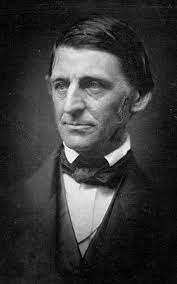
Emerson is a key figure in transcendentalism. He brought together many of the original transcendentalists, and his writings form the foundation of many of the movement’s beliefs. The day before he published his essay “Nature” he invited a group of his friends to join the “Transcendental Club” a meeting of like-minded individuals to discuss their beliefs. He continued to host club meetings, write essays, and give speeches to promote transcendentalism. Some of his most important transcendentalist essays include “The Over-Soul,” “Self-Reliance,” “The American Scholar” and “Divinity School Address.”

 Transcendentalism is a very formal word that describes a very simple idea. People, men and women equally, have knowledge about themselves and the world around them that "transcends" or goes beyond what they can see, hear, taste, touch or feel.

This knowledge comes through intuition and imagination not through logic or the senses. People can trust themselves to be their own authority on what is right. A Transcendentalist is a person who accepts these ideas not as religious beliefs but as a way of understanding life relationships.

The individuals most closely associated with this new way of thinking were connected loosely through a group known as The Transcendental Club, which met in the Boston home of George Ripley. Their chief publication was a periodical called "The Dial," edited by Margaret Fuller, a political radical and feminist whose book "Women of the Nineteenth Century" was among the most famous of its time. The club had many extraordinary thinkers but accorded the leadership position to Ralph Waldo Emerson.

Emerson's Transcendentalism:

Transcendentalism, Emerson had firsthand knowledge (p. 389), but (p. 383 note 2) of the Transcendentalists, Emerson was "only the most distinguished disciple, although very unfaithful a disciple now and then." Emerson was "only an idealist at odd times." That Emerson was, to some extent, a disciple of Channing can be supported, but who are the other Transcendentalists whom Emerson followed like his masters? Were they Ripley, Brownson, Emerson's contemporaries, or Parker his own disciple? Professor Girard does not say. Nor does he state what day and what moment of his life Emerson ceased to be an idealist.

To show Emerson's aloofness from the Transcendentalist brotherhood, Professor Girard quotes from the famous lecture on the Transcendentalist where Emerson, taking for a while the point of view of the objectors, writes of the Transcendentalists that: "They are not good citizens..." A reference to the lecture will show that the contention here is not Emerson's but that of the public, and Emerson answers it in what follows.

The secret of Professor Girard's animosity to Emerson is not far to seek. Those who have laid stress on the German origin of the movement are the same, according to him, who take Emerson for the leader of Transcendentalism. For Professor Girard, one cannot be a Transcendentalist in the sense of Emerson without being suspected of German sympathies. Emerson becomes, from that fact, a stumbling block to the theory of French influence. Hence the ostracism against him.

Has not Emerson also been the victim of Professor Girard's strained classifications and divisions? To emphasize, as his right was, French influence, Professor Girard insists on the religious aspect of Transcendentalism, but cannot deny that it had also a philosophical aspect. Neither on this point does it seem that Professor Girard has made his views very clear. Have there really been two successive and distinct phases of New England Transcendentalism, one religious up to 1835, represented by Channing, the other one philosophical after that date?

Professor Girard himself is not very sure of the fact, but he makes the statement "for the sake of exposition," a statement which he finally takes for granted. But how can Ripley, Brownson, and Parker who, chronologically, belong to the second period, be brought to testify in the first? And how can Ripley and Brownson, Emerson's contemporaries, represent "the soul" of Transcendentalism under its religious aspect against the author of the Divinity School address? Had not Emerson, himself a well-known preacher and lecturer, his own Transcendental philosophy of religion, not to be dismissed without a thorough inquiry and discussion?

If New England Transcendentalism had, as stated by Professor Girard, a second and philosophical period, after 1835, who represented it besides Emerson?

Is Emerson, to be excluded from Transcendentalism, offered a fair treatment by Professor Girard when we read as unconvincing an argument as the following on "the little influence Emerson had on the men of his time" (p. 395 note 4)? Is it fair to recall that only 500 copies were sold of Nature, Emerson's first and anonymous book, while his different addresses and lectures since 1834 stirred the New England public, as recorded in particular by Lowell and Holmes after hearing Emerson's lecture on the American Scholar, that "intellectual Declaration of Independence" according to Holmes? (See Emerson's Works, Centenary Edition I p. 415).

Let us accept, for the sake of argument, Professor Girard's views of Transcendentalism under a double aspect, the first "essentially" religious and the second philosophical, and let us see how Emerson stands, in both cases, as a true Transcendentalist.

Transcendentalism, An American Philosophy

TRANSCENDENTALISM is a very formal word that describes a very simple idea. People, men and women equally, have knowledge about themselves and the world around them that "transcends" or goes beyond what they can see, hear, taste, touch or feel.

This knowledge comes through intuition and imagination not through logic or the senses. People can trust themselves to be their own authority on what is right. A TRANSCENDENTALIST is a person who accepts these ideas not as religious beliefs but as a way of understanding life relationships.

The individuals most closely associated with this new way of thinking were connected loosely through a group known as THE TRANSCENDENTAL CLUB, which met in the Boston home of GEORGE RIPLEY. Their chief publication was a periodical called The Dial, edited by Margaret Fuller, a political radical and feminist whose book Women in the Nineteenth Century was among the most famous of its time. The club had many extraordinary thinkers, but accorded the leadership position to RALPH WALDO EMERSON.
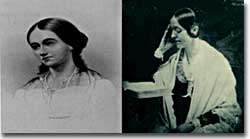
Sarah Margaret Fuller
Margaret Fuller 

Emerson was a Harvard-educated essayist and lecturer and is recognized as our first truly "American" thinker. In his most famous essay, "THE AMERICAN SCHOLAR," he urged Americans to stop looking to Europe for inspiration and imitation and be themselves. He believed that people were naturally good and that everyone's potential was limitless. He inspired his colleagues to look into themselves, into nature, into art, and through work for answers to life's most perplexing questions. His intellectual contributions to the philosophy of transcendentalism inspired a uniquely American idealism and spirit of reform.


Henry David Thoreau
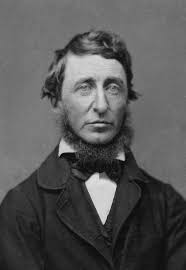

The second-most important transcendentalist, Thoreau was a friend of Emerson’s who is best known for his book Walden. Walden is focused on the benefits of individualism, simple living and close contact with and observation of nature. Thoreau also frequently opposed the government and its actions, most notably in his essay “Civil Disobedience.”

Margaret Fuller
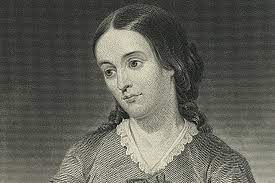

Margaret Fuller was perhaps the leading female transcendentalist. A well-known journalist and ardent supporter of women’s rights, she helped cofound The Dial, the key transcendentalist journal, with Emerson, which helped cement her place in the movement and spread the ideas of transcendentalism to a wider audience. An essay she wrote for the journal was later published as the book Woman in the Nineteenth Century, one of the earliest feminist works in the United States. She believed in  the importance of the individual, but often felt that other transcendentalists, namely Emerson, focused too much on individualism at the expense of social reform.

Amos Bronson Alcott
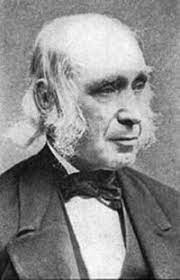

A friend of Emerson’s, Alcott (father of Little Women’s Louisa May Alcott), was an educator known for his innovative ways of teaching and correcting students. He wrote numerous pieces on transcendentalism, but the quality of his writing was such that most were unpublishable. A noted abolitionist, he refused to pay his poll tax to protest President Tyler’s annexation of Texas as a slave territory. This incident inspired Thoreau to do a similar protest, which led to him writing the essay “Civil Disobedience.”

 Conclusion

Transcendentalism is all about spirituality. It can not be achieved through reason and rationalism but instead through reason and rationalism but instead through self-reflection and Intuition, in other words, transcendentalists believe spirituality is not something explained. It is something you feel. 


Thank You

Resources:

Britannica, The Editors of Encyclopaedia. "transcendental idealism". Encyclopedia Britannica, 14 Feb. 2020, https://www.britannica.com/topic/transcendental-idealism. Accessed 24 April 2024.
Michaud, Régis. “Emerson’s Transcendentalism.” The American Journal of Psychology, vol. 30, no. 1, 1919, pp. 73–82. JSTOR, https://doi.org/10.2307/1413661. Accessed 24 Apr. 2024.
Thoreau, Henry David. “Transcendentalism, An American Philosophy [ushistory.org].” USHistory.org, https://www.ushistory.org/us/26f.asp. Accessed 24 April 2024.

Whedon, Tony. “Transcendentalism.” The Iowa Review, vol. 32, no. 2, 2002, pp. 77–81. JSTOR, http://www.jstor.org/stable/20155116. Accessed 24 Apr. 2024.
[Words - 2084, Image 7, Video-2]

paper No : 107 - The Twentieth Century Literature -From world war 2 to the End of The century - Assignment

 Assignment- Paper No: 107

This Blog is an Assignment of Paper no.107 The Twentieth Century Literature -From World War 2 to the End of the Century. In this assignment, I am dealing with the topic 'The Myth of Sisyphus' and Existentialism.

Information:

Name: Asha Rathod

Paper 107: The Twentieth Century Literature -From World War 2 to the End of The Century

Subject Code: 22400

Topic Name: 'The Myth of Sisyphus' and Existentialism

Batch: M.A. Sem-2 (2023-25)

Roll No: 3

Enrollment No: 5108230038

Email Address: asharathod1451@gmail.com

Submitted to: Smt. S. B. Gardi, Department of English, MKBU


'The Myth of Sisyphus' and Existentialism


Albert Camus:


Albert Camus was a French philosopher, writer, and journalist who lived from 1913 to 1960. He was born in Algeria, which was then a French colony, and grew up in poverty. His father died when he was young, and he was raised by his mother and grandmother.

Camus was an excellent student and received a scholarship to study philosophy at the University of Algiers. He began his career as a journalist, working for various newspapers in Algeria and Paris. He also became involved in the French Resistance during World War II, and his experiences influenced his writing and philosophy.

Camus was active in political and social causes in addition to his writing. For a time, he was a member of the French Communist Party, but he eventually lost faith in communism and became a vocal critic of Soviet-style socialism. He also advocated for human rights and spoke out against the use of the death penalty.

Camus died in a car accident in 1960 at the age of 46. He remains an important figure in 20th-century philosophy and literature, and his ideas continue to be studied and debated today.

Best Known works:


"The Stranger" (1942) - a novel that tells the story of Meursault, a French Algerian who kills an Arab man and is put on trial.
→ "The Myth of Sisyphus" (1942) - an essay in which Camus introduces his concept of the "absurd" and explores the question of whether life has any meaning or purpose.
→ "The Plague" (1947) - a novel that tells the story of a small town in Algeria that is hit by a deadly epidemic.
→ "The Rebel" (1951) - a philosophical essay in which Camus explores the idea of rebellion and the importance of individual freedom and choice.
→ "The Fall" (1956) - a novel in which a former judge named Jean-Baptiste Clamence reflects on his life and his moral choices.
→ "Caligula" (1944) - a play that explores the theme of power and the corruption it can bring.
→ "The Just Assassins" (1949) - a play that tells the story of a group of revolutionaries who plot to assassinate a Grand Duke.
→ "A Happy Death" (written in 1936, published posthumously in 1971) - a novel about a young man named Patrice Mersault who dreams of living an authentic life.
 
These works have had a significant impact on philosophy and literature, and they continue to be widely read and studied today.

Themes :


The Absurd:


Camus defines the absurd as the conflict between the human need for meaning and purpose in life and the inherent meaninglessness and irrationality of the universe. This theme is central to the essay, and Camus uses the story of Sisyphus as a metaphor for the human struggle to find meaning in a meaningless world.


Rebellion:


Camus suggests that although the world may be meaningless, we can rebel against it by creating our own meaning and purpose through acts of creativity, solidarity with others, and the pursuit of personal freedom and dignity. This theme is closely related to the concept of the absurd, as rebellion is seen as a way to overcome the sense of futility and despair that arises from the conflict between human desires and the meaninglessness of the universe.


Acceptance:


Camus argues that the only way to overcome the absurdity of life is to accept it fully and live in the present moment. By doing so, we can find a kind of freedom and happiness that is not dependent on external circumstances or the pursuit of material wealth or success. This theme is related to the idea of rebellion, as acceptance is seen as a way to rebel against the absurdity of life by embracing it fully.


Individualism:


Camus emphasises the importance of individual freedom and choice in the face of the absurdity of life. He suggests that the pursuit of personal dignity and authenticity is more important than external success or conformity to societal norms. This theme is related to the idea of rebellion, as individualism is seen as a way to create meaning and purpose in a fundamentally meaningless world.


One of the most influential works of this century, this is a crucial exposition of existentialist thought. Influenced by works such as Don Juan, and the novels of Kafka, these essays begin with a meditation on suicide: the question of living or not living in an absurd universe devoid of order or meaning. With lyric eloquence, Camus posits a way out of despair, reaffirming the value of personal existence, and the possibility of life lived with dignity and authenticity.


The Myth of Sisyphus is a small work, but Camus’s meditation on faith and fate has personally been hugely important in developing my ideas. Writing in the embers of World War II, Camus confronts in The Myth of Sisyphus both the tragedy of recent history and what he sees as the absurdity of the human condition. There is, he observes, a chasm between the human need for meaning and what he calls “the unreasonable silence of the world”. Religion is a means of bridging that chasm, but a dishonest one. “I don’t know if the world has any meaning that transcends it,” he writes. “But I know that I do not know this meaning and that it is impossible for me just now to know it.”


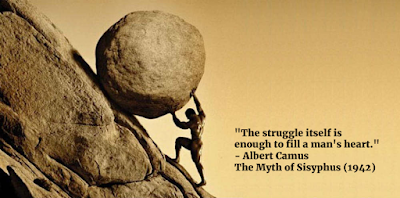
Camus does not know that God does not exist. But he is determined to believe it, because that is the only way to make sense of being human. Humans have to make their own meaning. And that meaning can come only through struggle, even if that struggle appears as meaningless as that of Sisyphus, who, having scorned the gods, was condemned by them to spend eternity in the underworld, forever rolling a rock to the top of a mountain.


The certainties of religion provide false hope, and in so doing undermine our humanity by denying human choice. So do any other false certainties with which we may replace religion. For Camus, religious faith had to be replaced neither with faithlessness, nor with another kind of false certainty, but with a different kind of faith – faith in our ability to live with the predicament of being human. It was a courageous argument, especially in the shadow of the Holocaust. And it is an argument that remains as important today as it was then.


Sisyphus in Greek Mythology :

The Myth of Sisyphus is a story from Greek mythology that explores the human condition of struggle and the search for meaning in life. According to the myth, Sisyphus was a king who was known for his cunning and deceitful nature. He was punished by the gods for his hubris and was forced to push a boulder up a hill for all eternity.


Each time Sisyphus would almost reach the top of the hill, the boulder would roll back down, and he would have to start again. The task was deemed impossible, and Sisyphus was forced to repeat it endlessly. The punishment was meant to teach him the futility of his actions and the importance of humility.


Sisyphus refused to give up despite his seemingly hopeless situation. In the struggle, he found a sense of purpose and used his wits and determination to find ways to make the task more bearable. The Sisyphus myth has come to represent the struggle of human existence and the search for meaning in life, even in the face of seemingly insurmountable obstacles.


Existentialism:


Existentialism is a 20th-century philosophical and literary movement that emphasizes individual freedom, choice, and responsibility in the face of life's meaninglessness and absurdity.


Existentialism is fundamentally concerned with fundamental questions of human existence, such as the meaning of life, the nature of death, and the relationship between the individual and society. Existentialist writers and thinkers frequently address these issues through literature, philosophy, and psychology, emphasizing the importance of personal experience and subjective interpretation.

The concept of the absurd, which refers to the conflict between human desires and the universe's inherent meaninglessness and irrationality, is a key idea in existentialism. This can result in feelings of despair.

The importance of individual freedom and choice is another central idea in existentialism. Existentialists argue that instead of relying on external values and norms, individuals have the ability and responsibility to create their own meaning and purpose in life.

Existentialism has had a significant influence on literature, philosophy, and psychology, as well as a diverse range of thinkers and writers. Among the most well-known existentialist authors are Jean-Paul Sartre, Albert Camus, and Friedrich Nietzsche. Other writers, such as Franz Kafka, Samuel Beckett, and Virginia Woolf, have used existentialist themes in their works.

Existentialism is a multifaceted philosophical and literary movement concerned with the search for meaning and purpose in life, the individual struggle against the absurdity of existence, and the value of individual freedom and choice.

How can one fail to feel the basic relationship of these minds! How can one fail to see that they take their stand around a privileged and bitter moment in which hope has no further place? I want everything to be explained to me or nothing. And the reason is impotent when it hears this cry from the heart. The mind aroused by this insistence seeks and finds nothing but contradictions and nonsense. What I fail to understand is nonsense. The world is populated with such irrationals. The world itself, whose single meaning I do not understand, is but a vast irrationality. If one could only say just once: "This is clear," all would be saved. But these men vie with one another in proclaiming that nothing is clear, all is chaos, that all man has is his lucidity and his definite knowledge of the walls surrounding him.


M. Sartre may say, and indeed does say, that man has no essence antecedently to his free choices; he creates freely. But since he is able to define the content of his existential analysis in such a way that it is difficult to take him altogether seriously, his proposition, "existence precedes essence," appears more as an emphatic assertion of liberty and an escape from any form of physical or psychological determinism. For Sartre, the proposition is certainly bound up with the sense that he denies the existence of any preconceived idea of man, which is realized or unfolded in existence. But if the proposition is understood in this way, it can be acceptable not only to Sartre and Camus but also to those who cannot involve atheism, though it would seem to exclude any form of that determinism which seems to be implicit in many other systems, such as that of Leibniz, for example.


Nor does it seem that we can define existence in reference to what one might call "personal experience." Kierkegaard was certainly a personal thinker, in the sense that his philosophy was based on his personal experience, and so far as he was concerned (a knowledge of his personal relations with his father and with Regina Olsen is by no means unimportant for an understanding of his thought), and so far as he had no desire to construct an "objective system," he directed his polemic precisely against "the System" and its adherents. But one could hardly say the same of Heidegger, who attempted in Sein und Zeit to construct an ontology, to examine the meaning of being. In a letter to Jean Wahl, Heidegger has declared that his philosophy was not Existenzphilosophie, that it was not concerned with human existence or the being of human beings, but only as a preparatory stage to an examination of being as such. Therefore, his philosophy should not be confused with that of Jaspers, who considers the concrete possibilities open to the individual and who is aiming at the development of any general theory of existence. It is true that Jaspers has declared that it is the task of philosophy to awaken man to the possibilities of choice and that existentialism, as a general theory, is the death of the philosophical spirit; but he is much more of an observer, a philosopher of "situations" than a personal thinker in the sense in which Kierkegaard was a personal thinker.


  Thank You

Resources:

Camus, Albert. The myth of Sisyphus, and other essays. Edited by Justin O'Brien, translated by Justin O'Brien, Vintage Books, 1991.

Coates, J. B. “Existentialism.” Philosophy, vol. 28, no. 106, 1953, pp. 229–38. JSTOR, http://www.jstor.org/stable/3748098. Accessed 26 Apr. 2024
.
 Copleston, F. C. “Existentialism.” Philosophy, vol. 23, no. 84, 1948, pp. 19–37. JSTOR, http://www.jstor.org/stable/3747384. Accessed 24 Apr. 2024.

Slochower, Harry. “The Function of Myth in Existentialism.” Yale French Studies, no. 1, 1948, pp. 42–52. JSTOR, https://doi.org/10.2307/2928857. Accessed 24 Apr. 2024.

[Words - 2138, Image 5, Video-2]


Paper No: 106 - The Twentieth Century Literature -1900 to World War 2 - Assignment

 Assignment- Paper No: 106


This Blog is an Assignment of Paper no.106 The Twentieth Century  Literature -1900 to World War 2. In this assignment I am dealing with the topic The Feminism aspects of Virginia Woolf's Life and her Novels’.


Information:

Name: Asha Rathod

Paper 106: The Twentieth Century  Literature -1900 to World War 2

Subject Code: 22399

Topic Name: The Feminism aspects of Virginia Woolf's Life and her Novels

Batch: M.A. Sem-2 (2023-25)

Roll No: 3

Enrollment No: 5108230038

Email Address: asharathod1451@gmail.com

Submitted to: Smt. S. B. Gardi, Department of English, MKBU


The Feminism aspects of Virginia Woolf's Life and her Novels


Introduction

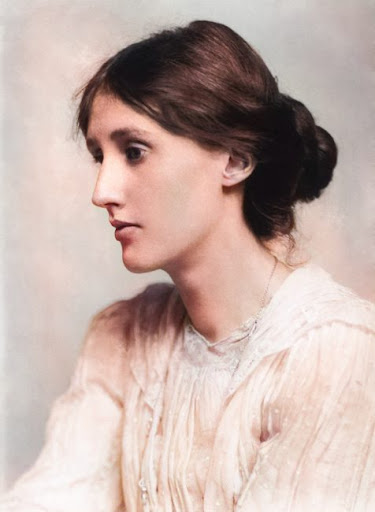
Virginia Woolf (born January 25, 1882, London, England—died March 28, 1941, near Rodmell, Sussex) was an English writer whose novels, through their nonlinear approaches to narrative, exerted a major influence on the genre.

While she is best known for her novels, especially Mrs. Dalloway (1925) and To the Lighthouse (1927), Woolf also wrote pioneering essays on artistic theory, literary history, women’s writing, and the politics of power. A fine stylist, she experimented with several forms of biographical writing, composed painterly short fictions, and sent to her friends and family a lifetime of brilliant letters.

Her parents were Leslie Stephen, editor of the Dictionary of National Biography and Julia Prinsep Jackson Duckworth Stephen. Both parents had been married before and had children from those unions. Together, the Stephens had three other children in addition to Virginia Woolf was educated at home where she had free access to her father's extensive library. In 1895 her mother died, and Woolf experienced the first of many psychological breakdowns that would plague her throughout her life.


Virginia Woolf (1882-1941) was one of the most important female authors in the transitional period from Victorian age to the Edwardian age. Until her death at the age of 59 she published several novels, feminist essays and held two classes in Cambridge about “Women and Fiction”.


In this ,I would like to introduce the feminism aspects of her life and novels.


After giving a short introduction with the most important facts about Virginia Woolf’s life, my first intention is to define the theory of feminism and show how it affected Virginia already as a young girl and mainly as an independent woman.


Later, three of her novels are taken to demonstrate how Virginia Woolf’s development influenced her literary output. I would also like to show the differences between Virginia Woolf’s attitude towards women and men and compare it to theories of the feministic movement in the 20th century.


 A short introduction into Virginia Woolf’s life


Born as the third child of Sir Leslie Stephen, the editor of the “Dictionary of National Biography”, and his second wife Julia Duckworth, January 1st 1882, Virginia and her siblings grew up in London where she had always had easy access to education, such as private classes in Latin and Greek - which was not a common case for girls in Victorian times - and also to her father’s library.


There were two major incidents in Virginia’s youth that caused serious mental breakdowns: Her mother’s death in 1895 and seven years later, her father’s death of cancer.[1] After recovering from this mental crisis, Virginia enjoyed her new independence, travelling to Spain and Italy, accompanied by her sister Vanessa and her brother Thoby, who later died of Typhus.


Virginia returned to London where she made friends with Leonard Woolf. After getting married in 1912, Leonard had to find out that Virginia not only refused any sexual relationship with him, but also had numerous breakdowns during the following years, including several tries of committing suicide. This mental illness carried on during her whole life, usually appearing shortly before finishing her most recent novel.


Definition of the  “Feminism”


To analyse Virginia Woolf’s attitude towards feminism and how this is demonstrated in her books and essays, there has to be a definition first of what “feminism” means in general: Feminism is “the belief in the principle that women should have the same rights and opportunities as men” also “the movement in support of this” But there are also different types of feminism, such as the “cultural feminism”, the “Individualist or Libertarian Feminism”, the “Moderate Feminism” and several more. What they all have in common is that they have the same origin which is to call attention to the problem of discrimination between men an women concerning different issues, social and private.


The feminism movement started already in the 19th century although it did not develop as fast as in the beginning of the 20th century when the female presence in public, work-life and also in the media at that time was accepted.


The media and female writers were the main supporters of the feministic movement, that achieved and changed a lot, but still has not reached his goal, for it still works with the same principles such as for example the “Emma”.


Feminist Narrative in Virginia Woolf


Individual Quest and the Transformation of Hero and Heroine into a Communal Protagonist. The protagonist, a large family, a group of friends, an audience, contains members of all ages and sexual persuasions, fostering close bonds and blurring the lines between public and private spheres, polarized sexes, and familial boundaries. In Woolf's narrative, eros is liberated from forced or conventional bonds, particularly heterosexuality and marriage.


In 1927, Woolf anticipated intergeneric works that would reject the realist sociological novel focusing on facts, incomes, and environment, as well as the psychological novel centered on the analysis of falling into and out of love, and plots of quests ending in success or failure and romance. Her later novels replace these narratives with the invention of a communal protagonist and a collective language.


The communal protagonist shifts the focus away from individual development against a backdrop of supporting characters or the formation of heterosexual couples. Instead, it places the group at the center of the narrative. This approach emphasizes collective Bildung and communal effect rather than individual Bildung or romance, suggesting a plausible utopia of social change in narrative structures.


Woolf equalizes characters to discredit the social practice of privileging certain individuals in narratives. In works like "The Years" and "Between the Acts," no character stands higher in the plot than any other; value is conveyed collectively. Woolf employs rhetorical and stylistic tactics to make community plausible, intertwining choral remarks and utilizing conversational ellipses and question marks to encourage dialogue and openness.


Woolf's rejection of traditional narrative structures is evident in her use of rejected working titles for her novels, such as "The Caravan" and "Ordinary People," which emphasize collective journeying and the multiplicity of ordinary lives. Overall, Woolf's novels express a rejection of the individual "I" in favor of the collective "we."


How the theory of Feminism influenced Virginia as an adolescent


The relationship between her parents, the talented and highly respected Leslie Stephen and his beautiful wife, who was always there to give him support and her unshared attention, had a great effect on Virginia’s attitude towards men. It is said that she inherited her mother’s beauty but that she could not deal with it the way her mother did. She regarded her mother's ability to get along with other people so well with great approval but she could not cope with her mother’s behavior as it was appropriate for a woman in Victorian times – a role her mother fit perfectly in. After her mother died in 1895 at the age of 49, Leslie Stephen tried to force his daughters into the empty space the mother left as being a perfect hostess, which made them fear and hate their father, and which had also a great effect on Virginia striving for a way out of this Victorian tradition.


Another influence in her development towards an important author of modern feminism was her two step-brothers, George and Gerald Duckworth, but also her own brothers, Thoby and Adrian, who enjoyed a full education at Cambridge University, while she stayed at home, taught by her parents and later receiving private classes, an untypical phenomenon in Victorian times, as already mentioned above.


The Famous Novels of Virginia, which differ from The feminist Issues of the Woman.


  • A Room of One's Room

  • To The lightHouse

  • Orlando 

  • Mrs. Dalloway

  • The voyage Out

 These are the famous Novels of Virginia Woolf. In that reading through we can get the idea of She was a FEMINIST.


The modernist classic writer and ecofeminist Virginia Woolf was born on 25 January 1882. During the Interwar period she played a vital role in Bloomsberry and London group of intellectuals. Woolf started her literary career in 1900 and her first publication was Haworth, November 1904. She was one of the prime modernist in the 20th-century English literature. Virginia Woolf has Inscribed prodigious novels and has also mentored her fair share of efficacious English movies. Nature veracity plays a vigorous role in her fictions. Her works are meticulous as a crucial trendsetter in the English Language. She meticulously used stream of consciousness, Nostalgia, ecofeminism and woman empowerment strategies in her characters. She is disputably the paramount lyrical novelist in the English language. Her craving of poetic prophecy hoists the wartime milieus.
These researchers found out there is a close relationship between patriarchal dominance and vehemence against women. Numerous ecofeminist writers also highlighting these points in their writings. such as Susan Griffin (1978) and Mary Daly in (1978). Carolyn Merchant at (1980). Ynestra King at (1981), Ariel Kay Salleh at (1984), Karen Warren from (1987-1990), Val Plumwood (1993) and others. Ecofeminists ruminate an mals, water, trees, loxins, food production and more ypicaly naturalism. In literature, there are ten types of 
possessions incorporated in ecofeminism discussed widely they are historical, conceptual, empirical, epistemological, socioeconomic, spiritual and religious, linguistic, symbolic interconnections. literary, political and ethical
Virginia Woolf followed non-linear free form prose style which impressed many of her cohorts. Her mood smacks style and striking of dejection get pictured in her novel. She suffered from severe mental trauma and closeness with nature at last she drowned herself at the age of fifty nine in the year 1941. Her stream of consciousness and her urge to escape from the monotonous mundane world is expressed vividly in her novels. She wrote thirteen non-fiction books, four volumes of collected essays, she published three biographies, six short story collections, one drama, one translation seven autobiographical writings and diaries, three bulk collections of her letters and best nine novels of hers.

Few of her prodigious elite was The Voyage Out ner first novel published in the year 1915. The second novel was Night and Day published in 1919, and the third was Jacob's Room (1922), the fourth was ecoleminist nectar Mrs. Dalloway (1925), the fifth nature kindling novel was To the lighthouse (1927). The sixth novel was Orlando in 1928 The seventh was The Years (1937) and the last novel was Between the Acts which was published in 1941


Let's see The Feminist quotes by Virginia Woolf.


Woolf writes:

CLOTHES HAVE, THEY SAY, MORE IMPORTANT OFFICES THAN MERELY TO KEEP US WARM. THEY CHANGE OUR VIEW OF THE WORLD AND THE WORLD’S VIEW OF US.

 ORLANDO AS A PERSONIFICATION OF THE IDEAL STATUS OF ANDROGYNY; SOMEONE WHO KNOWS THE SECRETS OF BOTH SEXES AND CAN ACCESS THE WHOLE SPECTER OF HUMAN EXPERIENCE.

 The novel exuberantly conveys its message of the urge of gender equality in our society. Ergo, my feminist reading of Orlando salutes Woolf as an author, who so beautifully cultivates the fluid identities of the notions of sex and gender in her piece.

"Orlando is not a woman acting like a man. Orlando is a man. And a woman. And there is nothing unnatural about it. Orlando had become a woman, there is no denying of it. But in every other respect, Orlando remains precisely as he had been. The change of sex, though it altered their future, did nothing whatever to alter their identity."

 When in Constantinople amongst the natives, Orlando did not experience gender differences due to her changed sex. However as soon as she boards the Enamoured Lady to return to England, appropriately dressed as a “young Englishwoman of high rank”, she realizes that English “women are not exquisitely apparelled by nature”.


Conclusion

If we see the character of Virginia Woolf. so we can get the idea of a feminist woman of the 20th century. whose novel is to be part of the feminist idea of women. who are suffering and fighting for the rights, that are not found for the woman. Also, The Victorian age is one of the Examples of it. exploring the feminist aspects of Virginia Woolf's life and her novels reveals a profound commitment to challenging patriarchal structures and advocating for gender equality. Through her life experiences and literary works, Woolf offered insightful critiques of societal norms and conventions that oppressed women, advocating for their liberation and empowerment.

Woolf's personal struggles, including experiences of gendered discrimination and limitations imposed by societal expectations, deeply influenced her feminist perspective. These struggles are reflected in her novels, where she explores themes of female identity, agency, and the constraints imposed by gender roles. In her writing, Woolf experimented with narrative techniques to portray the inner lives of women, giving voice to their experiences and emotions. Through works like "Mrs. Dalloway," "To the Lighthouse," and "Orlando," she challenged traditional notions of femininity and masculinity, disrupting binary constructions and exploring the fluidity of gender and identity.

 Thank You

Resources:


BLANCHARD, LYDIA. “VIRGINIA WOOLF AND HER CRITICS: ‘ON THE DISCRIMINATION OF FEMINISMS.’” Studies in the Novel, vol. 17, no. 1, 1985, pp. 95–103. JSTOR, http://www.jstor.org/stable/29532328. Accessed 24 Apr. 2024.


DE GAY, JANE. “Virginia Woolf’s Feminist Historiography in ‘Orlando.’” Critical Survey, vol. 19, no. 1, 2007, pp. 62–72. JSTOR, http://www.jstor.org/stable/41556201. Accessed 24 Apr. 2024.


Duplessis, Rachel Blau. “Feminist Narrative in Virginia Woolf.” NOVEL: A Forum on Fiction, vol. 21, no. 2/3, 1988, pp. 323–30. JSTOR, http://www.jstor.org/stable/1345500. Accessed 24 Apr. 2024.


Reid, Panthea. "Virginia Woolf". Encyclopedia Britannica, 16 Apr. 2024, https://www.britannica.com/biography/Virginia-Woolf. Accessed 24 April 2024.


Sivaranjani, Dr k. “Eco feminism in Virginia Woolf's novels.” Wikipedia, February 2017, https://www.researchgate.net/publication/319957566_Eco_feminism_in_Virginia_Woolf's_novels. Accessed 24 April 2024.


[Words - 2383, Image 02, Video-2]

Paper 206: The African Literature- Presentation

 Paper 206:  The African Literature-  Presentation  Youtube Video :-