Wednesday, April 24, 2024

paper No : 109 - Literary Theory and criticism and Indian aesthetics- Assignment

 Assignment- Paper No: 109

This Blog is an Assignment for Paper no.109 Literary Theory and Criticism and Indian Aesthetics. In this assignment, I am dealing with the topic of Archetypes in Hamlet.


Information:

Name: Asha Rathod

Paper 109: Literary Theory and Criticism and Indian Aesthetics.

Subject Code: 22402

Topic Name: Archetypes in Hamlet

Batch: M.A. Sem-2 (2023-25)

Roll No: 3

Enrollment No: 5108230038

Email Address: asharathod1451@gmail.com

Submitted to: Smt. S. B. Gardi, Department of English, MKBU


Archetypes in Hamlet

  • Introduction: 

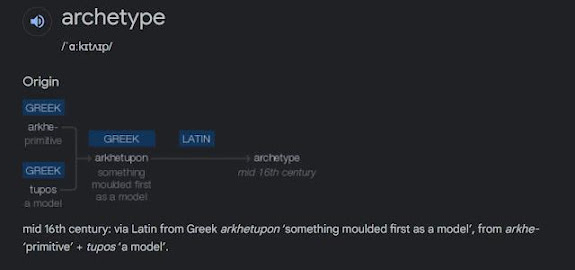
Archetype is described as the original pattern or model of which all things of the same type are representations or copies. Northrop Frye defined an archetype as a symbol, usually an image, which recurs often enough in literature to be recognizable as an element of one’s literary experience as a whole.  

An archetype is a literary device in which a character is created based on a set of qualities or traits that are specific and identifiable for readers. The term archetype is derived from the studies and writings of psychologist Carl Jung who believed that archetypes are part of humanity’s collective unconscious or memory of universal experiences. In a literary context, characters (and sometimes images or themes) that symbolically embody universal meanings and basic human experiences, independent of time or place, are considered archetypes.

For example, one of the most common literary archetypes is the Hero. The hero is generally the protagonist of a narrative and displays ubiquitous characteristics such as courage, perseverance, sacrifice, and rising to challenge. Though heroes may appear in different literary forms across time and culture, their characterization tends to be universal thus making them archetypal characters.

Another way of thinking about archetypes is to imagine that in some way it is possible to plot the important aspects of a story onto a graph. If enough points from several stories were plotted a pattern would start to appear. If one then drew a line that approximated the pattern that emerged in the points, that best-fit line would be an archetype. No story perfectly matches the archetype, and some stories will diverge from the archetype more than others. Still, recognizing that a pattern exists can be a powerful tool in understanding and comparing literature

  • Archetypes in Hamlet:

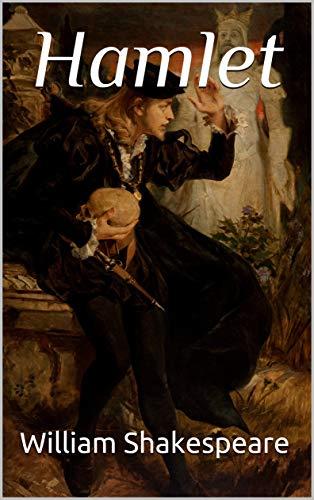
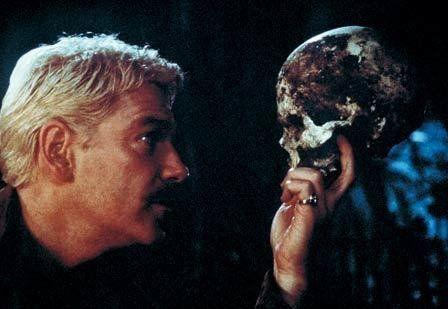
Hamlet sits at the crossroads of three archetypes: the Child, the Tragic Hero, and the Trickster. As the title suggests, Hamlet is the main character, and his evolution from an innocent child to an avenging killer is the focus of the play.

  • The Child: aspects include growing to potential, growing up, realizing self

  • The Tragic Hero: involves facing a fatal flaw, neither good nor evil, and suffering more than they 'deserve'

  • The Trickster: involves breaking rules, destroying conventions, and promoting chaos to pursue one's own goals.

  • The Child Archetype:

As a perennial student, Hamlet is an idealistic innocent or child archetype. While there is some debate about how old Hamlet is supposed to be in the play, he is called "young Hamlet" or "noble youth" several times. And despite its elements of ghosts and intrigue, the plot of the play revolves around the question of whether Hamlet can stop brooding, grow up, and avenge his father's murder. This archetype is universal in coming-of-age novels. It can also involve wise-beyond-their-years children and its opposite, adults who never grow up.


  • The Tragic Hero Archetype:

After witnessing his father's ghost and the “immoral” relationship between his uncle and his mother, Hamlet is cast in the role of the Avenging Tragic Hero. This archetype almost always dies at the end of his or her story. This is because the task he or she desires to complete is beyond mortal justice. It becomes a fatal flaw that leads to a tragic end. By seeking to avenge his father by murdering his uncle, Hamlet subverts the natural order and causes several unintentional deaths, including that of a pure innocent, his love interest Ophelia. Other tragic heroes include Oedipus from Oedipus Rex, Gatsby from The Great Gatsby and Okonkwo from Things Fall Apart.

  • The Trickster Archetype:

One of the enduring mysteries surrounding Hamlet is whether the main character is insane. Some claim that his misogynistic outbursts at his mother and Ophelia prove that he is actually mad. Others see these attacks and other statements as proof that Hamlet was, as he claims in the play, pretending to be crazy. And there's also a hybrid idea that Hamlet's mock madness eventually drives him really insane. A writer who has experts scratching their heads and debating character motivations centuries later is doing something right.

  • This is Hamlet in his guise as the Trickster archetype. 

  • The Trickster archetype is clever and usually uses evasion and tricks instead of a more straightforward tactic like fighting. Hamlet employs his trickster guise to find out the truth about his uncle, Claudius, and Ophelia's father, Polonius. Unfortunately, this doesn't save him from a bloody death at the end of the play.

  • The King: The King archetype embodies control, power, and leadership. People choose to follow him.

  • The Shadow King: There are two versions of the Shadow King: Weakling and Tyrant. The Weakling King uses lies and deceit to rule. The Tyrant used excessive force and violence.

  • Old King Hamlet:

The King archetype is focused on matters of state. He wants to exercise power and control. The idealized King archetype inspires others to follow him rather than forcing them to do his bidding. Old Hamlet, as the appointed King, embodies this masculine persona. In the first act of the play, the ghost of Old Hamlet appears in full military regalia. The ghost commands his son's friends to swear upon the sword and keep his secrets. When the King archetype commands, his followers immediately obey. Old Hamlet is also described as a warrior, successfully leading his army against Norway and defeating its King in hand-to-hand combat, showing his strength and command on the battlefield.  

  • Claudius:

Claudius embodies the weakling shadow of the King archetype. Unlike Old Hamlet, Claudius is a smooth-talking diplomat, not a warrior. He is compared poorly to the old King throughout the play, using sly and underhanded methods to accomplish his goals. First, he poisons his brother in his sleep. Then, he spies and plots against Hamlet, until finally, he attempts to have Hamlet killed instead of confronting him face-to-face. 

  • The Maiden and Mother Archetypes: Ophelia and Gertrude:

Interestingly, there are no positive female archetypes in Hamlet. Hamlet spurs the seemingly genuine affection of both Ophelia and his mother, Queen Gertrude. These two characters may represent some aspects of Hamlet's twisted anima—the unconscious feminine sides of a man.

This negative light forces Ophelia and Gertrude into the shadows of their archetypes: the Maiden and the Mother.

The Maiden: The Maiden archetype embodies innocence and growth. She is beginning her journey and is full of idealistic hope.

The Shadow Maiden: The Shadow Maiden is stalled in her growth and has left her powerless. Someone else has stolen her agency.

The Mother: The Mother archetype embodies nurturing, love, and gentle governance.

The Shadow Mother: The Overbearing Mother is possessive and oppressive. Her attempts to nurture end up driving her literal or symbolic child away.


  • Ophelia:

The Maiden archetype is an innocent young woman who is at one with nature. Snow White and Cinderella are excellent fairy tale examples. They sing to birds and dream of true love. Ophelia, as the Shadow Maiden archetype, is put in an untenable position. She cares for Hamlet, but she must help her father spy on him. Hamlet also rebuffs her love and says cruel things to her. In the famous Nunnery scene (Act 3, Scene 1), Hamlet tells her to "Get thee to a nunnery." This statement exemplifies the dual archetype of Ophelia. This is a double entendre—at the time, a nunnery was both a convent for religious nuns and slang for a brothel. 

The jaded harlot is the exact shadow archetype of the innocent maiden. Hamlet sees her as faithless, like a harlot who offers her favors to anyone with money. After her father's death, Ophelia goes mad. She sings, but her songs are twisted. Her death is also a dark fairytale; she drowns after falling into a stream.

  • Gertrude:

Gertrude takes on the shadow of the Mother archetype. The Mother archetype nurtures her family and puts their well-being ahead of her own. As written, Queen Gertrude tries to embody this archetype. She wasn’t involved in her first husband's murder. Her hasty marriage to her husband's brother appears to have been for the good of Denmark. 

But, in Hamlet’s eyes, Gertrude becomes the shadow of the Mother archetype: the Overbearing Mother. Every time she attempts to help her son, it ends up hurting one or both of them. She tries to comfort Hamlet in his grief, but he treats her relationship with Claudius as incestuous. By believing in Hamlet's insanity, she nearly gets him assassinated by her villainous new husband. And finally, she ends up drinking the poisoned wine intended for her son.

Hamlet’s twisted view of his mother can be clearly seen in an archetypal reading of Hamlet Act 3, Scene 4. Here, Hamlet confronts his mother about her relationship with Claudius, asking her why she would forsake her noble husband (Old Hamlet) for his “mildewed” brother. Even after murdering Polonius, Hamlet claims that his deed is only “almost as bad” as hers.

Hamlet is hyper-focused on his mother’s relationship with Claudius, ranting about “the rank sweat of an enseamed bed” and how it is “stewed in corruption.” In Hamlet’s view, the Mother archetype should limit her romantic relationships with her husband (even if he has died). Anything beyond that is a gross sin. This scene is an Oedipal reaction from Hamlet, where he is more offended than his ghostly father who appears later in the scene and takes pity on Gertrude. (3.4.113-115) 

  • The Sage Archetype: Polonius

The Sage archetype is a wise advisor, able to guide the protagonist on his or her quest.

  • Shadow Sage:

The Old Fool provides bad advice that puts the hero in danger. The Dogmatic Judge holds the hero back with restrictive rules and laws. The Sage represents spirituality or knowledge and acts as a mentor or adviser to the protagonist. Polonius embodies the shadows of this archetype: the doddering fool and the dogmatic judge. Hamlet describes him as a "tedious old fool." (Act 2, Scene 2) He speaks in cliched proverbs or maxims and is generally wrong about everything. The character wields a dual nature: naivete and cunning. Some experts suggest that, like Poirot or Columbo, he hides his cunning beneath an outward appearance of foolishness. Like Claudius, Polonius has his servants spy on his son, Laertes, suspecting that his son is gambling and behaving immorally.

  • Conclusion: 

In literature, we study economics, science, social science, etc. Like in Phonetics, we studied biology also. As Fry said Literature is the center of the humanities' It covers all disciplines from different sorts of humanities. We can identify many archetypes in particular literary texts. From Shakespeare to J.K. Rowling, we can find many archetypal readings. It is quite a wide area to read as a particular model of story. 

Thank you

Work Citation

“Archetype - Examples and Definition of Archetype.” Literary Devices, https://literarydevices.net/archetype/. Accessed 25 April 2024.

Barad, Dilip. “(PDF) I.A. Richards - Figurative Language - Practical Criticism.” ResearchGate, 5 January 2024, https://www.researchgate.net/publication/377146653_IA_Richards_-_Figurative_Language_-_Practical_Criticism. Accessed 27 April 2024.


FISCHER, SANDRA K. “Hearing Ophelia: Gender and Tragic Discourse in ‘Hamlet.’” Renaissance and Reformation / Renaissance et Réforme, vol. 14, no. 1, 1990, pp. 1–10. JSTOR, http://www.jstor.org/stable/43444750. Accessed 25 Apr. 2024.

Landa, JA García, et al. “(PDF) Notes from Northrop Frye's 'Anatomy of Criticism.'” ResearchGate, https://www.researchgate.net/publication/340539011_Notes_from_Northrop_Frye's_'Anatomy_of_Criticism'. Accessed 25 April 2024.

YUNG, CARL. “NORTHROP FRYE: THE ARCHETYPES OF LITERATURE.” Government Arts College for Women, Salem, https://www.govtwomencollegeslm8.org/e_content/English/II%20M.A.%20ENGLISH/LITERARY%20CRITICISM/UNIT%20-III%20NORTHROP%20FRYE.pdf. Accessed 25 April 2024.


[Words -1860, Image-3, Video-2]


Paper No: 108 - American Literature - Assignment

  Assignment- Paper No: 108


This Blog is an Assignment of Paper no.108 American Literature. In this assignment, I am dealing with the topic of Transcendentalism: A Movement.


Information:

Name: Asha Rathod

Paper 108: American Literature

Subject Code: 22401

Topic Name: Transcendentalism: A Movement

Batch: M.A. Sem-2 (2023-25)

Roll No: 3

Enrollment No: 5108230038

Email Address: asharathod1451@gmail.com

Submitted to: Smt. S. B. Gardi, Department of English, MKBU


Transcendentalism: A Movement

Transcendentalism

  Transcendentalism is a philosophical movement. It looks like various aspects. Also going beyond the idea of Romanticism.

Transcendentalism To go above and beyond the limitation of the senses and everyday experiences.

* we can go beyond by depending on our intuition rather than on reason and logic.

Key words: Simplicity but it's not simple.

which does not have an answer.

The keyword for transcendentalism is simplicity.

Transcendentalism - A movement 

  • Transcendentalism is a 19th-century movement of writers and philosophers in New England

  • who were loosely bound together by adherence to an idealistic system of thoughts.

  • Based on the belief in the essential unity of all creation, the innate goodness of man.

  • And the supremacy of insight over logic and experience for the revelation of the deepest truths.

what is Transcendentalism 

It’s all about spirituality. Transcendentalism is a philosophy that began in the mid-19th century and whose founding members included Ralph Waldo Emerson and Henry David Thoreau. It centers around the belief that spirituality cannot be achieved through reason and rationalism, but instead through self-reflection and intuition. In other words, transcendentalists believe spirituality isn’t something you can explain; it’s something you feel. A transcendentalist would argue that going for a walk in a beautiful place would be a much more spiritual experience than reading a religious text.

*Major Transcendentalist Values*

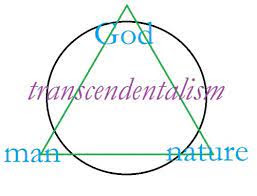
 The transcendentalist movement encompassed many beliefs, but these all fit into their three main values of individualism, idealism, and the divinity of nature.

 Individualism

Perhaps the most important transcendentalist value was the importance of the individual. They saw the individual as pure, and they believed that society and its institutions corrupted this purity. Transcendentalists highly valued the concept of thinking for oneself and believed people were best when they were independent and could think for themselves. Only then could individuals come together and form ideal communities.

Idealism

The focus on idealism comes from Romanticism, a slightly earlier movement. Instead of valuing logic and learned knowledge as many educated people at the time did, transcendentalists placed great importance on imagination, intuition and creativity. They saw the values of the Age of Reason as controlling and confining, and they wanted to bring back a more “ideal” and enjoyable way of living.

 Divinity of Nature

Transcendentalists didn’t believe in organized religion, but they were very spiritual. Instead of believing in the divinity of religious figures, they saw nature as sacred and divine. They believed humans needed to have a close relationship with nature, the same way religious leaders preach about the importance of having a close relationship with God. Transcendentalists saw nature as perfect as it was; humans shouldn’t try to change or improve it.

Key Figures in the Transcendentalist Movement

At its height, many people supported the beliefs of transcendentalism, and numerous well-known names from the 19th century have been associated with the movement. Below are five key transcendentalists.

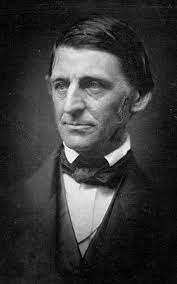
Ralph Waldo Emerson

Emerson is a key figure in transcendentalism. He brought together many of the original transcendentalists, and his writings form the foundation of many of the movement’s beliefs. The day before he published his essay “Nature” he invited a group of his friends to join the “Transcendental Club” a meeting of like-minded individuals to discuss their beliefs. He continued to host club meetings, write essays, and give speeches to promote transcendentalism. Some of his most important transcendentalist essays include “The Over-Soul,” “Self-Reliance,” “The American Scholar” and “Divinity School Address.”

 Transcendentalism is a very formal word that describes a very simple idea. People, men and women equally, have knowledge about themselves and the world around them that "transcends" or goes beyond what they can see, hear, taste, touch or feel.

This knowledge comes through intuition and imagination not through logic or the senses. People can trust themselves to be their own authority on what is right. A Transcendentalist is a person who accepts these ideas not as religious beliefs but as a way of understanding life relationships.

The individuals most closely associated with this new way of thinking were connected loosely through a group known as The Transcendental Club, which met in the Boston home of George Ripley. Their chief publication was a periodical called "The Dial," edited by Margaret Fuller, a political radical and feminist whose book "Women of the Nineteenth Century" was among the most famous of its time. The club had many extraordinary thinkers but accorded the leadership position to Ralph Waldo Emerson.

Emerson's Transcendentalism:

Transcendentalism, Emerson had firsthand knowledge (p. 389), but (p. 383 note 2) of the Transcendentalists, Emerson was "only the most distinguished disciple, although very unfaithful a disciple now and then." Emerson was "only an idealist at odd times." That Emerson was, to some extent, a disciple of Channing can be supported, but who are the other Transcendentalists whom Emerson followed like his masters? Were they Ripley, Brownson, Emerson's contemporaries, or Parker his own disciple? Professor Girard does not say. Nor does he state what day and what moment of his life Emerson ceased to be an idealist.

To show Emerson's aloofness from the Transcendentalist brotherhood, Professor Girard quotes from the famous lecture on the Transcendentalist where Emerson, taking for a while the point of view of the objectors, writes of the Transcendentalists that: "They are not good citizens..." A reference to the lecture will show that the contention here is not Emerson's but that of the public, and Emerson answers it in what follows.

The secret of Professor Girard's animosity to Emerson is not far to seek. Those who have laid stress on the German origin of the movement are the same, according to him, who take Emerson for the leader of Transcendentalism. For Professor Girard, one cannot be a Transcendentalist in the sense of Emerson without being suspected of German sympathies. Emerson becomes, from that fact, a stumbling block to the theory of French influence. Hence the ostracism against him.

Has not Emerson also been the victim of Professor Girard's strained classifications and divisions? To emphasize, as his right was, French influence, Professor Girard insists on the religious aspect of Transcendentalism, but cannot deny that it had also a philosophical aspect. Neither on this point does it seem that Professor Girard has made his views very clear. Have there really been two successive and distinct phases of New England Transcendentalism, one religious up to 1835, represented by Channing, the other one philosophical after that date?

Professor Girard himself is not very sure of the fact, but he makes the statement "for the sake of exposition," a statement which he finally takes for granted. But how can Ripley, Brownson, and Parker who, chronologically, belong to the second period, be brought to testify in the first? And how can Ripley and Brownson, Emerson's contemporaries, represent "the soul" of Transcendentalism under its religious aspect against the author of the Divinity School address? Had not Emerson, himself a well-known preacher and lecturer, his own Transcendental philosophy of religion, not to be dismissed without a thorough inquiry and discussion?

If New England Transcendentalism had, as stated by Professor Girard, a second and philosophical period, after 1835, who represented it besides Emerson?

Is Emerson, to be excluded from Transcendentalism, offered a fair treatment by Professor Girard when we read as unconvincing an argument as the following on "the little influence Emerson had on the men of his time" (p. 395 note 4)? Is it fair to recall that only 500 copies were sold of Nature, Emerson's first and anonymous book, while his different addresses and lectures since 1834 stirred the New England public, as recorded in particular by Lowell and Holmes after hearing Emerson's lecture on the American Scholar, that "intellectual Declaration of Independence" according to Holmes? (See Emerson's Works, Centenary Edition I p. 415).

Let us accept, for the sake of argument, Professor Girard's views of Transcendentalism under a double aspect, the first "essentially" religious and the second philosophical, and let us see how Emerson stands, in both cases, as a true Transcendentalist.

Transcendentalism, An American Philosophy

TRANSCENDENTALISM is a very formal word that describes a very simple idea. People, men and women equally, have knowledge about themselves and the world around them that "transcends" or goes beyond what they can see, hear, taste, touch or feel.

This knowledge comes through intuition and imagination not through logic or the senses. People can trust themselves to be their own authority on what is right. A TRANSCENDENTALIST is a person who accepts these ideas not as religious beliefs but as a way of understanding life relationships.

The individuals most closely associated with this new way of thinking were connected loosely through a group known as THE TRANSCENDENTAL CLUB, which met in the Boston home of GEORGE RIPLEY. Their chief publication was a periodical called The Dial, edited by Margaret Fuller, a political radical and feminist whose book Women in the Nineteenth Century was among the most famous of its time. The club had many extraordinary thinkers, but accorded the leadership position to RALPH WALDO EMERSON.

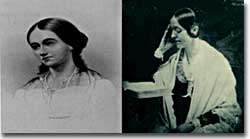
Sarah Margaret Fuller
Margaret Fuller 

Emerson was a Harvard-educated essayist and lecturer and is recognized as our first truly "American" thinker. In his most famous essay, "THE AMERICAN SCHOLAR," he urged Americans to stop looking to Europe for inspiration and imitation and be themselves. He believed that people were naturally good and that everyone's potential was limitless. He inspired his colleagues to look into themselves, into nature, into art, and through work for answers to life's most perplexing questions. His intellectual contributions to the philosophy of transcendentalism inspired a uniquely American idealism and spirit of reform.


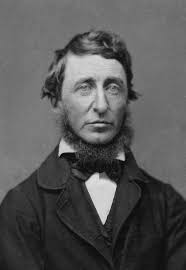
Henry David Thoreau


The second-most important transcendentalist, Thoreau was a friend of Emerson’s who is best known for his book Walden. Walden is focused on the benefits of individualism, simple living and close contact with and observation of nature. Thoreau also frequently opposed the government and its actions, most notably in his essay “Civil Disobedience.”

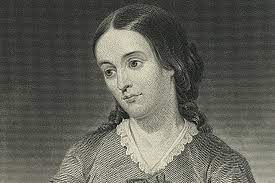
Margaret Fuller


Margaret Fuller was perhaps the leading female transcendentalist. A well-known journalist and ardent supporter of women’s rights, she helped cofound The Dial, the key transcendentalist journal, with Emerson, which helped cement her place in the movement and spread the ideas of transcendentalism to a wider audience. An essay she wrote for the journal was later published as the book Woman in the Nineteenth Century, one of the earliest feminist works in the United States. She believed in  the importance of the individual, but often felt that other transcendentalists, namely Emerson, focused too much on individualism at the expense of social reform.

Amos Bronson Alcott


A friend of Emerson’s, Alcott (father of Little Women’s Louisa May Alcott), was an educator known for his innovative ways of teaching and correcting students. He wrote numerous pieces on transcendentalism, but the quality of his writing was such that most were unpublishable. A noted abolitionist, he refused to pay his poll tax to protest President Tyler’s annexation of Texas as a slave territory. This incident inspired Thoreau to do a similar protest, which led to him writing the essay “Civil Disobedience.”

 Conclusion

Transcendentalism is all about spirituality. It can not be achieved through reason and rationalism but instead through reason and rationalism but instead through self-reflection and Intuition, in other words, transcendentalists believe spirituality is not something explained. It is something you feel. 


Thank You

Resources:

Britannica, The Editors of Encyclopaedia. "transcendental idealism". Encyclopedia Britannica, 14 Feb. 2020, https://www.britannica.com/topic/transcendental-idealism. Accessed 24 April 2024.
Michaud, Régis. “Emerson’s Transcendentalism.” The American Journal of Psychology, vol. 30, no. 1, 1919, pp. 73–82. JSTOR, https://doi.org/10.2307/1413661. Accessed 24 Apr. 2024.
Thoreau, Henry David. “Transcendentalism, An American Philosophy [ushistory.org].” USHistory.org, https://www.ushistory.org/us/26f.asp. Accessed 24 April 2024.

Whedon, Tony. “Transcendentalism.” The Iowa Review, vol. 32, no. 2, 2002, pp. 77–81. JSTOR, http://www.jstor.org/stable/20155116. Accessed 24 Apr. 2024.
[Words - 2084, Image 7, Video-2]

Paper 206: The African Literature- Presentation

 Paper 206:  The African Literature-  Presentation  Youtube Video :-