Hello friends welcome to my blog. This is very interesting blog on the poem "When we two parted" written by Lord Byron. Poet express his feelings when he parted from his beloved. Let's we look this poem in detail.
Introduction
Lord Byron achieved tremendous popularity as a poet in his short life. As a poet he has written many poems like...
1. Child Harold's Pilgrimage
2. The Prisoner of chill-on
3. Don Juan
4. When we two Parted. etc....
'When we two parted' was written in 1808. This poem refers to one of poet's earlier lady loves. This poem is about the feeling of poet when they parted with each other. Let us discuss this poem in detail.
Theme of the poem
The Title of the poem 'When we two parted' itself suggests, the theme of 'Separation'. Apart from love, poet has focused on the moment when they separated with each other. In this poem poet has described his experience of life after the parted of beloved. He also shows that after the pared of beloved his life become painful.
It means the theme of the poem shows painful life of a person whose beloved is parted from him.
Analysis of the poem
When We Two Parted
George Gordon Byron - 1788-1824
When we two parted In silence and tears, Half broken-hearted To sever for years, Pale grew thy cheek and cold, Colder thy kiss; Truly that hour foretold Sorrow to this.
The dew of the morning Sunk chill on my brow-- It felt like the warning Of what I feel now. Thy vows are all broken, And light is thy fame; I hear thy name spoken, And share in its shame.
They name thee before me, A knell to mine ear; A shudder comes o'er me-- Why wert thou so dear? They know not I knew thee, Who knew thee too well-- Long, long shall I rue thee, Too deeply to tell.
In secret we met-- In silence I grieve, That thy heart could forget, Thy spirit deceive. If I should meet thee After long years, How should I greet thee?-- With silence and tears.
The poem 'When we two parted' is divided into four stanza . The first stanza begins with the line...
"When we two parted
In silence the tears,
Half broken-hearted
To server for years."
The above line shows the moment from which a poet has to depart from his beloved. The word like 'tears' and 'silence' show the sorrowful moment of life. While the word "half broken-hearted shows that the heart is broken and it is not recovered for many years. He also says that there is no charm in her cheek and kiss. Her kiss become colder and cold means it loses it's warms. It means there is no feeling of love at the time of departure.
Second stanza
In the second stanza the poet has described the feeling of soft morning. The word 'dew' shows unpleasant atmosphere of life. According to the poet....
"They vows are all broken
And light is they fame,
I hear they name spoken
And share in its shame".
It means his beloved has broken all the promise and there was no value of love for her. The poet also writes their fame become light day by day. The poet feels shame when her name is spoken.
Third stanza
In the third stanza poets writes..
"They name thee before me ,
A knell to mine ear,
..........long long shall I rue thee
Too deeply to tell".
Here, poet says that when the people took her name before me it made me trouble. It also creates vibration in his body because of sadness. Poet also says that why the people took his name with her without knowing anything. It shows the poet's pain in his heart because of his beloved.
Fourth stanza
In the fourth stanza the poet writes that he can't express his sorrow openly when they meet in secret. He also writes that he felt pain in silence but his beloved has forgotten him entirely. The poet says...
"If I should meet thee,
After long years,
How should I greet thee?
With silence and tears".
Here, one question aroused in poet's mind that if they should meet after long time how should he react with her? Poet himself gives the answer that he treats her with silence and tears. It shows poet's painful life after the departure of his beloved.
Style of writing
As for style is concerned, port has used nicely all the levels. In phonological level (the level of sound) the poet has used rhyme scheme AB, AB, CD, CD in all the stanza. He has also used alliteration and rhyming words. The poet has also used the grammatical pattern like pronoun, verbs and and also many simple words. So that the reader can easily read and understand the meaning of this poem.
Conclusion
The poem 'When we two parted' is an autobiographical poem of Lord Byron. In this poem the poet has expressed his lamentation of departure. He has narrated his experience of painful life after the departure with his beloved. The poet has also used phonological level, grammar and also the meaning of this poem. Thank You!
Hello readers welcome to my blog.This is my blog about the very famous short story "The Heathen". Let's we try to analysis the story in detail.
Introduction
There was a fashion, a trand to write fiction about adventurous mainly in the middle of the sea. In 19th century American literature 'Treasure Island' by Mark Twain, 'Blow up with the ship' by Wilkie Collins, ' Moby Dick' by Herman Melville and many other stories about sea life and adventurous are some of the examples of fiction about the world of the sea. The Heathen is another fine example of adventurous journey in the pacific by Jack London. He was a novelist, journalist, short story writer and essayist. One more fact regarding such fiction is that the write's of such stories where themselves associated with the sea life very closely. Jack London worked at various hard labour jobs. Pirated for served on a fish patrol to capture poachers, sailor the pacific on shelling ship etc.
Here is such adventurous story in detail.
Title of the Story
The title of this short story 'The Heathen' is a strange world. The meaning of this word is a person who doesn't believe in god , an atheist. The narrator meets too, the Heathen during his remains with the narratDor for seventeen years. The story highlights greater qualities of the Heathen. So the title is apt.
Theme of the Story
The Heathen like many other American stories highlights the adventures in the middle of the sea. It shows how the narrator and Otoo spend life together at various parts of the worlds. It also introduces the character sketch of Otoo as noble human being. The story shows how a white man, the narrator and native belonging to an Island, development friendship.
Characterisation
Short Story introduces a small group of characters similarly The Heathen introduces mainly two characters the narrator himself and Otoo, the Heathen. Though this is a long short story. Others character are minor and they have little role to play like other sailors, The pearl treaters, the local inhabitant,Bill king etc.Jack London draws the character sketch of Otoo very powerfully. He is a kind, nobel and more than a family member to the narrator. He is peaceful by nature but when his challenged, he also a strong fighter.
Setting
This is an adventurous tale about the sea life. There for the setting is mostly the sea. The story develops at ship, pots, Islands and the places closely connected with the sea. The pacific, the story begins with the narrator of the ships, pots, Islands and the places closely connected with the sea. The pacific the story begins with the narration of the the ship the petitesteseam and then many other places are narrated in this story. Plot Adventure stories highlight the life of sailors mainly the stories related the sea. Story begins with the narrator's journey in the ship petaitjenne, unfortunately the ship meets a storm. There is also epidemic in the ship that claim many lives. Luckily the narrator is survived with Otoo he meets first time in this sheep. Otoo belongs to BoraBora Island. A coloured man. Then they live together as brother, friends for seventeen years facing every problem. The narrator develops business well with the help of Otoo. He is an assitant, a friend and more than a brother for the narrator. At the end of the story , Otoo sacrifices his life to save the narrator from the shark. Throughout the life Otoo serves the narrator. The narrator himself, Jack London was experienced of the sea life. He had worked on the ship. So his portray of the sea life can be more effective and realistic. 'The Heathen' shows many aspects of the sea life minutely.He shows adventures, the horror side of the sea as well as the beauty of the sea. His characterisation is also powerful.
Hello everyone! This blog is a task assigned by Megha Trivedima’am. It deals with the several assigned questions based on T.P Kailasam’s The Karna or Curse.
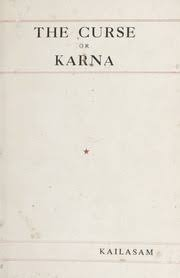
THE CURSE OR KARNA
T.P. Kailasam
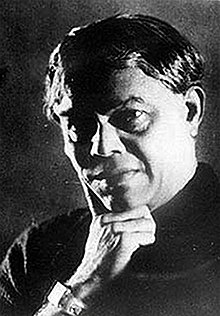
Tyagraj Paramasiva Iyer Kailasam , his life span is 1884 to 1946. He was a playwright and prominent writer of Kannada literature. His contribution to Kannada theatrical comedy earned him the title Prahasana Prapitamaha, "the father of humorous plays" and later he was also called "Kannadakke Obbane Kailasam" meaning "One and Only Kailasam for Kannada".
The Curse or Karna
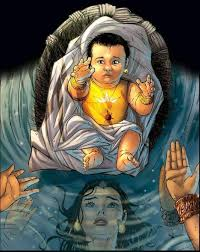
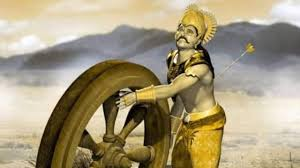
Karna, son of Surya and Kunti and the doyen of archers, endures a challenging journey on his way to becoming one of the greatest warriors of the Mahabharata. His Foster parents were Sootha Radha and Adirath. The story of Karna begins with the misfortune of his secret birth and unfolds itself amidst the unremitting gloom of injustice and insult. Karna was lodged in the section reserved for ordinary pupils and away from the section reserved for princes and other high caste students. The Curse or Karna is one of the best known works of Kailasam. This story is from Karna’s perspective. Here we get to see Karna as a hero of Mahabharat. He was the one who in spite of being of high class society had to face all the shame of being in lower caste. In every step of his life he has been cursed for being a Sootha. In ancient times society was divided into 4 categories based on their work (karma) but slowly with time it changed and everyone had to do work based on birth. In this case lower birth talent was never counted and was cursed. Same happened with Karna. In Mahabharat he is always shown as a supporting character. We never knew in detail about the pains of his life. T.P. Kailasam in this work has tried to bring Karna as a hero and brought to us pains of his life. The story of Karna is the intriguing story of a hero who despite being born to royalty was brought up lovingly by a lowly charioteer and his wife, his whole life was one great struggle against cruel destiny and all the odds placed in his way by the inequities of his time.
Recently on the Hindi television Sony channel began a television series named ‘Suryaputra Karna’. In that also Karna was the hero in the serial and his life and pains were shown. Here is a promo of the serial. The story revolves around the best archer of the Mahabharata, Karna and narrates the entire story of Mahabharat from Karna and Pandavas' birth to the eventual crowning of Karna in the Swarga. The show covers the life journey of Karna on his way to becoming a great warrior.
T.P. Kailasam’s play is divided into 5 Acts. act 1,3,5 contains two scenes. The play does not narrate the whole Mahabharat, it contains some important scenes like
Raama’s (Parshuram) Ashram i.e. the scene of Karna’s last day of pupildom;
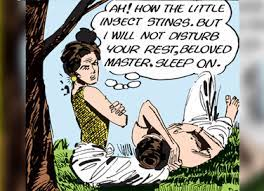
Guru sleeping in Karna’s lap- Anon, mason wasp scene
The Royal Stadium of Hastinapur- competition after competition of training between Pandavas and Kavravas
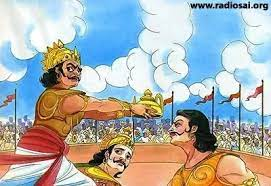
Karna crowned as king of Angaraj
Panchali, Draupadi Swayamvar
Conversation between Draupadi and Karna
Chirharan of Draupadi
Battlefield in Kurukshetra
Kunti revealing the truth
Death of Karna
1) Interpret the 'end' of all Acts and scenes.
Act-1
Gurujee Raama
POOR KARNA! POOR, POOR KARNA!
Act- 2
Gandharaj
POOR ANGA! POOR POOR HONEST ANGA!
Act- 3
The King Suyodhan
The King POOR ANGA! OUR POOR GREAT ANGA !
Act- 4
Bheema
(Anga crumples into Bheema’s arms who carries him out muttering amid tears: POOR ANGA! POOR GREAT ANGA!” The THRONE ROOM, empty now, is exposed for a minute before—)
Act 5
Aswattha
“OUR ANGA!” “OUR GREAT ANGA!”
(“OUR POOR POOR ANGA”!
Karna can be considered the most sympathetic character of Mahabharat. The happenings of his life always make us feel he is a poor thing. With a birth he was discarded by his mother being an illegal child, brought up by foster parents- Sootha’s despite being a blood of royal family, always faced insult by gurus and society for having power/ abilities instead of being a Sootha. He was a sharp child but no one was ready to guide him. He lied and took his training under Parshuram but unfortunately truth spilled and he was cursed by his Guru. At the end of his life he came to know his reality. He was crowned as a king but with a motive of using him against Pandavas by Suyodhan/ Duryodhan.
All the act of this play ends with Karna/ Anga being Poor (બીચારો). Every character who has a conversation with him feels sympathetic to him and realizes that anything that happened in his life is not a result of his mistake. It was fate. As we say karma helps to gain good and bad here Karna’s life cannot be measured so. By birth he was left out; he didn't get a chance for karma too.
2) Is 'moral conflict' and 'Hamartia' there in Karna's character?
A moral conflict is a situation in which a person has two moral obligations, which cannot be met both at once. Karna's moral conflict happened when during the war days his real mother Kunti came to him and told him all the truth and counted him among the Pandavas. Kunti requested him to fight for the Pandavas' cause. Because Karna was as powerful as Pandavas and he possessed all the power possessed by Pandavas. In this situation, if we think of Karna we can realize his struggle. He came to know his truth and now one one hand he has his own blood siblings and is fighting against them being with cousins. On the other he has all the burden of Suyodhan’s favors and promise of Friendship. He gets a moral conflict about do he be on part of siblings to whom he shares similarities or be with one who helped him, did favors gave him a respected place in society.
Hamartia is a fatal flaw leading to the downfall of a tragic hero. A flaw of character himself. In Karna’s life his flaw is his lying to Parshuram for gaining knowledge. He already knew about him giving training only to brahmins yet he deceived him. He had a personal cause for his lying and later he was cursed by his Guru which always stopped him and made him lack in his abilities.
His another hamartia can be considered is about his loyalty, primarily to Duryodhana. Karna joined Duryodhana's side in the Kurukshetra war. He was a key warrior who aimed to kill the third Pandava Arjuna but died in a battle with him during the war. He is a tragic hero in the Mahabharata, in a manner similar to Aristotle's literary category of "flawed good man".
Aristotle has said that "the good of man is the activity of his soul in conformity with virtue, or if there are several virtues, then in conformity with the best and most complete."
3) Karna - The voice of Subaltern
The word subaltern was generally used in the British army who had lower rank, junior position. an officer in the British army below the rank of captain, especially a second lieutenant.
Later we see after various literature this word was used for one who is/ was deprived of some learning or facilities due to his birth, caste or creed. Who were considered to be in a lower position in society by the elite class. They even didn't have basic freedom like speaking, attaining knowledge and using the basic facilities. When Britishers colonized over the major world in the name of Civilizing the uncivilized, the colonized whose basic rights were taken are also called subaltern.
The term ‘Subaltern’ was coined by Ranjit Guha and later it was adopted by Marxist Antonio Gramsci and further it was discussed by Gayathri Chakravarty Spivak in her essay ‘Can the Subaltern Speak?’ People consider Subaltern as the unrepresented group of people in the society, people of inferior race, not fit for making any real contribution to the society and therefore they cannot speak, but in reality subaltern can speak but others do not have the patience to listen to them and same can be seen with Karna, he is capable but he ultimately he is Sootha Putra.
As we discussed above also, Karna, unknown to his reality lived his life being Sootha, he had all the power, courage, bravery of a kshatriya blood but unknown to it growing a Sootha Family made him Subaltern. He was not given education, and was deprived of all basic rights from childhood. Even in the Kurukshetra war he blindly had to follow Suyodhan as he was king. His point of view was not considered. He was devoted to Suyodhana because of his favors and promise of friendship. Even in the chirharan act of Draupadi he stood for truth, he tried to stop Suyodhana which shows his enerosity and attitude of gentleman but his voice was subdued. Hence we can consider the voice of Karna to be the voice of Subaltern.
1) Write a critical note on Lakshman by Toru Dutt.
Toru Dutt
Toru Dutt was a pioneering Indian poet and writer of the 19th century, known for her remarkable literary talent at a very young age. Born in 1856 into a progressive Bengali family, Toru grew up immersed in both Indian and Western cultures. She was fluent in multiple languages, including English, French, and Sanskrit, which greatly influenced her work. Despite her short life—she passed away at just 21—Toru left behind a legacy of poetry and prose that bridged cultures, drawing from Indian mythology and European Romanticism. Her writing, filled with deep emotion and vivid imagery, reflects a sensitivity beyond her years, making her one of the earliest voices in Indian English literature. Toru Dutt's work continues to resonate for its lyrical beauty and its exploration of themes like identity, exile, and belonging.
Critical Note on "Lakshman" by Toru Dutt
Toru Dutt's poem "Lakshman" is a captivating retelling of a key moment from the Ramayana, but what makes it truly special is the emotional depth and complexity she brings to Lakshman’s character. Instead of just narrating the mythological event, Dutt dives into Lakshman’s inner world, painting him as a person deeply torn between duty and emotion.
In the poem, Lakshman is faced with a moral dilemma—he is bound by Rama’s command to stay with Sita and protect her, but when Sita hears Rama’s cry for help, she pleads with Lakshman to go save him. Lakshman’s conflict is palpable: he wants to obey his brother, yet he also feels the weight of Sita's distress. This struggle between his sense of duty and his instinct to protect those he loves is what drives the tension in the poem.
Dutt also uses rich, vivid language to convey the atmosphere of the forest and the looming danger of Ravana's deception. The setting feels alive, mirroring Lakshman’s inner turmoil. At the heart of the poem is the theme of duty versus personal desire, and Lakshman is portrayed as an ideal but deeply human figure who must make impossible choices.
Toru Dutt’s skill lies in her ability to make this ancient tale feel deeply relatable. She takes a moment of mythic importance and gives it emotional immediacy, showing how the gods and heroes of epic stories face very human feelings of doubt, responsibility, and sacrifice. This adds layers of meaning to the poem, making it not just a retelling of a legendary episode, but a meditation on loyalty, love, and the heavy burden of duty.
2) Do you think the character of Sita portrayed by Toru Dutt in her poem Lakshman differs from the ideal image of Sita presented in The Ramayana?
Yes, the character of Sita in Toru Dutt’s poem "Lakshman" does differ in some ways from the idealized image of Sita presented in the traditional *Ramayana*. In the epic, Sita is often seen as the epitome of patience, obedience, and unwavering loyalty. She is the ideal wife who silently endures suffering for the sake of her husband and adheres to her role as a dutiful and submissive figure.
However, in Toru Dutt’s portrayal, Sita comes across as more assertive and emotionally expressive. She is not passive in the face of danger; instead, she demands action from Lakshman. She challenges him, questions his loyalty, and is even forceful in her insistence that he leave to rescue Rama. This portrayal makes her a more active participant in the unfolding drama rather than the passive figure of endurance commonly seen in the *Ramayana*.
Sita’s emotional outburst in the poem—where she accuses Lakshman of having selfish motives and disregarding her safety—adds layers of complexity to her character. It shows a side of Sita that is driven by fear, love, and a deep sense of vulnerability, making her more human and relatable than the idealized version, who is often portrayed as almost unshakably calm and composed.
In this sense, Toru Dutt’s Sita is more modern in her emotional agency. She expresses frustration and anxiety in a way that breaks from the traditionally serene, self-sacrificing image of Sita in the *Ramayana*. This humanizes her character, making her reactions more relatable and highlighting her strength as not just an ideal wife, but a woman fighting for the safety of her loved ones.
3) Can it be said that the dialogues between Sita and Lakshman in the poem Lakshman through light upon the perspective of gender? Explain.
Yes, the dialogues between Sita and Lakshman in Toru Dutt’s *"Lakshman"* do shed light on gender perspectives.
Sita, often seen as the ideal, submissive woman in the *Ramayana*, is more assertive here. She strongly urges Lakshman to go help Rama, challenging him and questioning his loyalty. This shows Sita as not just a passive figure but someone who can voice her concerns and take charge, which defies the traditional gender role of women being silent or obedient.
On the other hand, Lakshman represents the typical male role of protector, torn between his duty to Rama and Sita’s emotional plea. His hesitation reflects the expectation that men must be rational and stick to their duties, even when women’s emotions demand otherwise.
Through their interaction, we see a clash of gender roles—Sita using her emotional power to influence Lakshman, and Lakshman caught between his protective role and his loyalty. This dynamic highlights how women, though often expected to be passive, can still assert their voices, while men are expected to manage emotions and make decisions. It adds complexity to the way gender roles play out in this traditional story.
4) Write a critical note on Toru Dutt’s approach to Indian myths.
Critical Note on Toru Dutt’s Approach to Indian Myths
Toru Dutt’s approach to Indian myths is unique and deeply insightful, as she brings a fresh perspective to ancient stories. While rooted in Indian mythology, her retellings, like in the poem *"Lakshman"*, are not mere repetitions of traditional narratives but rather reinterpretations that humanize the characters and explore their emotional complexities.
Blending Myth with Human Emotion
Dutt doesn’t treat the mythological figures as distant or untouchable symbols. Instead, she portrays them as relatable, emotionally complex individuals, which makes the myths accessible to a wider audience. For example, in *"Lakshman"*, she delves into the internal struggles of Lakshman and Sita, showing their fears, doubts, and vulnerabilities. This humanization of mythological characters adds depth and makes these ancient tales resonate with modern readers.
Focus on Personal Conflicts and Dilemmas
Dutt’s retellings often focus on personal, emotional conflicts rather than just the grand events or heroism typically associated with mythological stories. She emphasizes the internal dilemmas faced by her characters, such as Lakshman’s struggle between duty and compassion, or Sita’s fear and assertiveness. This approach brings out the human side of mythic figures, making their experiences more relatable and engaging.
Cultural Fusion
Toru Dutt’s background—being exposed to both Indian and Western cultures—shapes her approach to Indian myths. While her subjects are rooted in Indian tradition, her narrative style reflects the influence of European Romanticism, blending myth with lyrical expression and personal reflection. This fusion creates a bridge between the Eastern and Western literary worlds, making Indian myths more appealing to global audiences without losing their essence.
Empowering Female Characters
Another distinctive aspect of Dutt’s approach is her portrayal of female characters. In poems like *"Lakshman"*, Sita is not just a passive symbol of virtue but a strong, emotionally expressive character who takes control of her situation. Dutt gives voice to the women in her myths, often portraying them as complex, multifaceted individuals, which challenges the traditional, often one-dimensional portrayals of women in mythology.
Conclusion
Toru Dutt’s approach to Indian myths is both reverent and innovative. By blending emotional depth with cultural fusion and focusing on the internal struggles of mythological figures, she makes these ancient tales relevant and accessible. Her work humanizes legendary characters, empowering them with personal agency and emotions, which brings a fresh, modern lens to the retelling of Indian myths.
5) Write a critical note on To a Hero-Worshipper by Sri Aurobindo.
Sri Aurobindo:
Sri Aurobindo was a remarkable figure in India’s freedom movement and a philosopher who later became a spiritual leader. Born in 1872, Aurobindo was educated in England and initially worked as a key revolutionary in India’s fight for independence. However, after a deep spiritual experience, he shifted his focus to spiritual growth and inner transformation. He developed a philosophy of Integral Yoga, which aimed at harmonizing the material and spiritual aspects of life. His writings, both on politics and spirituality, have had a lasting impact, and his legacy continues through the spiritual community he founded in Pondicherry, the Aurobindo Ashram. He was a man of deep intellect and insight, blending activism with a quest for higher consciousness.
Critical Note on To a Hero-Worshipper by Sri Aurobindo
Sri Aurobindo’s poem *"To a Hero-Worshipper"* carries a powerful message about the nature of true admiration and heroism. Rather than merely celebrating the act of hero-worship, the poem challenges the worshipper to look beyond idolization and instead, cultivate the heroic qualities they admire in themselves.
A Call for Self-Empowerment
The poem reflects Aurobindo’s belief that true greatness doesn’t come from blindly following or adoring someone else. He encourages the reader to move beyond passive admiration and take active steps to embody the virtues of the heroes they look up to. This is a key idea in Aurobindo’s broader philosophy—growth and evolution come from within, and each person has the potential to rise to greatness if they strive for self-realization.
Breaking the Illusion of Idolization
Aurobindo questions the tendency to place heroes on a pedestal, as if they were unreachable figures. He highlights that heroism is not limited to a chosen few, but something anyone can attain by cultivating inner strength, courage, and spiritual depth. The poem discourages the idea of heroes as remote, god-like figures and instead promotes the concept that everyone has the capacity for heroic actions if they harness their potential.
Spiritual Undertones
As with much of Aurobindo’s work, there’s a strong spiritual undertone in the poem. It’s not just about physical or outward heroism but about inner transformation. He urges the hero-worshipper to engage in self-exploration and personal growth, reflecting his philosophy of Integral Yoga, where spiritual development is seen as the true path to fulfillment.
Uplifting and Inspiring Message
Overall, "To a Hero-Worshipper" is an inspiring call for personal empowerment. It emphasizes that heroism is not about idolizing others but about looking within and realizing one’s own strength and potential. The poem invites readers to aspire to their highest selves rather than remain in the shadow of others, making it both uplifting and thought-provoking.
In this way, Sri Aurobindo masterfully intertwines his spiritual teachings with a universal message about personal growth and the true meaning of heroism.
6) Why does the poet say that God does not live in the Temple? Give reasons.
When Sri Aurobindo says that "God does not live in the temple," he means several important things:
1. God is Everywhere
Aurobindo suggests that God is not limited to physical spaces like temples. While temples are important, true divinity exists all around us—in nature, in our lives, and within ourselves.
2. Inner Connection
He emphasizes that connecting with God comes from within, not just from rituals or visiting sacred places. It’s about personal growth and understanding rather than simply following traditions.
3. Everyone Can Connect with God
By saying this, Aurobindo highlights that everyone can experience the divine, no matter where they are. You don’t need to be in a temple to feel close to God; you can find that connection anywhere.
4. Actions Matter More
He also points out that true worship is shown through how we live our lives and treat others. God is found in acts of kindness and integrity, not just in religious ceremonies.
Conclusion
Overall, Aurobindo encourages a broader view of spirituality, inviting people to seek a deeper, personal connection with God that goes beyond traditional practices and physical places.
7) What type of social mentality does Rabindranath Tagore present in the poem Deeno Daan?
Rabindranath Tagore
Rabindranath Tagore was a multifaceted Indian poet, writer, artist, and musician, born in 1861. He is best known for his profound poetry and his ability to blend Indian culture with universal themes. Tagore was the first non-European to win the Nobel Prize in Literature in 1913, recognizing his extraordinary contributions to literature. His most famous work, *Gitanjali* (Song Offerings), is a collection of poems that reflect his spiritual insights and deep love for humanity. Beyond poetry, Tagore was also a playwright, essayist, and composer, creating songs that continue to resonate in Bengali culture. His philosophy emphasized the importance of connection between nature, art, and the human spirit, making him a beloved figure not only in India but around the world.
In the poem "Dino Daan" (Gift of a Day), Rabindranath Tagore presents a social mentality focused on kindness, selflessness, and helping those in need. Here are the main ideas:
1. Compassion for Others
Tagore emphasizes the importance of caring for the less fortunate. The speaker wants to give generously, showing a sense of responsibility towards those who are struggling.
2. Spiritual Value of Giving
Giving is portrayed as a sacred act that brings fulfillment. Tagore suggests that helping others connects us to something greater and helps us grow spiritually.
3. Critique of Materialism
The poem contrasts the focus on personal wealth with the values of generosity and compassion. Tagore implies that being overly materialistic can lead to emptiness, while helping others brings true happiness.
4. Connection Between People
Tagore highlights that we are all connected. When we give to others, we not only help them but also enrich our own lives. This encourages a sense of community and support rather than competition.
5. Joy in Kindness
The poem celebrates the simple joys that come from acts of kindness. Tagore shows that finding happiness in giving can lead to a more meaningful life.
Conclusion
Overall, *"Dino Daan"* promotes a mentality of empathy and connection. Tagore encourages us to shift our focus from self-centeredness to compassion and to see giving as a fundamental part of being human.