Rabindranath Tagore, , Bengali Rabīndranāth Ṭhākur, (7 May 1861 – 7 August 1941) was a poet, short story writer, novelist, playwright, painter, educator, philosopher and humanitarian. He also composed roughly 2,230 songs. His writings address a variety of topics. He was highly influential in introducing Indian culture to the west and vice versa. In 1913 he became the first non-European as well as the first lyricist to receive the Nobel Prize for literature. In 1915, he was knighted by the George V, King of the United Kingdom and Emperor of India, but he later renounced the knighthood as a protest against the 1919 Jaliānwala Bāgh massacre. His songs, Jana Gana Mana and Amar Śonar Bangla, later became the national anthems for India and Bangladesh respectively.
To the west, Tagore is mainly known as the voice of India’s spiritual heritage; and that certainly does not do justice to his all pervasive influence upon generations of authors as well as common people. In India, his authority is exploited to justify all sorts of political and ideological stance – expanding from extreme right to the liberal and the left. What is really missing is a healthy critical discourse on this great author. Tagore’s genius is comparable with that of Shakespeare's.
Introduction
The Home and The world by Rabindranath Tagore
The Home and the World (in the original Bengali, ঘরে বাইরে Ghôre Baire or Ghare Baire, lit. "At home and outside") is a 1916 novel by Rabindranath Tagore. The book illustrates the battle Tagore had with himself, between the ideas of Western Culture and revolution against the Western culture. These two ideas are portrayed in two of the main characters, Nikhilesh, who is rational and opposes violence, and Sandip, who will let nothing stand in his way from reaching his goals. These two opposing ideals are very important in understanding the history of the Bengalregion and its contemporary problems. 1 To see the growth of individual character.
Write about Rabindranath Tagore’s art of characterization.
The novel "The Home and The World" is a 1916 novel by Rabindranath Tagore. The book illustrates the battle Tagore had with himself, between the ideas of Western culture and revolution against the Western culture. Here our main concern is his art of characterisation.
The ‘Home and the World’ is a superb study in the psychological analysis of character. In the novel, we feel Tagore’s adept use of the multiple points of view technique which makes for a clear renunciation of the motives and states of mind of the principal characters. The device of presenting separate segments of the story through different characters helps Tagore to highlight the internal conflicts and convulsions. The principal characters in the novel are Nikhil, his wife Bimala and his close friend Sandip.
In the character of Nikhil, we see a true picture of a patriot who reflects the extra-national ideas that one should possess. Nikhil, a landlord of substantial means, is a man of noble ideas. Gently, rational and thoughtful, he cannot approve of any political programme based on violence and cunning. Nikhil has a rationalistic and constructive approach with emphasis on self-reliance and righteous means, to the problem of Indian emancipation. Nikhil though supports Swadeshi has not wholeheartedly adopted the spirit of Bande Matram. His “dull, milk and watery Swadeshi” does not appeal to his wife Bimala. Nikhil, though perturbed and pained by Bimala’s growing infatuation with Sandip, refuses to intervene and waits patiently for her to realize the truth of circumstances and recent herself headlong rush to ruin. He even refuses to banish foreign goods from the markets and argues that it is for the people to choose between indigenous and foreign goods. He declares,
“To tyrannize for the county is to tyrannize over the country”
He believes in the eventual triumph of the good.
As opposed to Nikhil’s genuine patriotism, sandip is opportunistic and means for achieving personal power. He is a hypocrite, unscrupulous, capable of sweeping along everyone with magnetism, sophistry and rhetoric. He is a man of action, dynamic, adventurous, experienced in the use of stratagems. Sandip goes about inflaming the people with the cult of Bande Matram and the concept of freedom by force Sandip exploits Bimala, Nikhil’s wife by exploring her as the “Queen Bee” of the Swadesh workers. Through clever flattery she lays a share for her mind and body by hailing her as the “Shakti of the Motherland” A juggler of words, Sandip succeeds however in winning the sympathies of Bimala and also prepares her to steal the gold sovereign’s from her own house. Tagore has represented Sandip as a black-hearted Patriot who shut the door on humanity and truth, and for his own utterly selfish and inflamed, immature minds to frenzy in the name of patriotism.
In characterizing Bimala, Tagore has put his great efforts to expose, beautiful young wife torn between two men she loves and likes. Bimala has lived the sheltered a life of a Hindu wife and the “Home” is the world for her until Sandip makes his disturbing appearance. In the opening chapter, we are acquainted with Bimala as a true house wife, devoted to her husband and shares his ideals until she is swept off her feet by the eruption of the Swadeshi Movement. It breaks down the barriers between the home and the world for Bimala. In this critical situation the fiery eloquence of Sandip holds Bimala spellbound. She admires the seemingly glowing patriotism of Sandip. Bimala’s attraction for Sandip at first is purely intellectual but soon changes from admiration to infatuation. Bimala is temporarily swayed by the maddening cry of “Bande Matram” and robs her own house. Like a cunning thief, for the sake of so called national cause. But, she is horrified when in lucid interval the ugly truth flashes on her, and she detests wholeheartedly the filthy means of Sandip to worship the Mother. His greed and lust masqueraded and paraded as nationalism, are extremely repulsive to Bimala now. She repents sincerely for her folly in looking down on her husband Nikhil, as an impotent idealist, whom she misunderstood up till now.
critical analysis of the novel 'The Home and the World'
It is rarely that one gets an opportunity to read good books; and it is even scarcer that we can connect, almost immersing ourselves with the ideas portrayed in them. I was skeptical in reading Tagore at first. Given his literary genius, one expects something entirely perplexing and requiring significant clarity of thought to even comprehend what he wishes to convey, but that wasn’t quite the case. The Home and The World was among the few books I would readily call absorbing.
The Home and The World is appealing right from the very beginning – the title itself. It is always difficult to decide on a correct title for a novel, or even a short essay. It has to give enough, but leave out enough as well. The title of this novel is in fact, more than just an aptly kept summary. One can assume the title a comparison, a stark contrast between the society of one’s own, and the one outside, a theme that carries throughout the book, through the characterization of two of the male protagonists, symbolic in several interesting ways.
The narration begins with Bimala, in the first person manner, and then vacillates between the three characters as the story progresses. First person narrative has a special attribute, which magnifies the impact of a character on the reader, that is, people generally familiarize with the character in first person, and can relate better to it. This particular feature in writing has been capitalized on greatly by Tagore; the intricacy in the detail of each character’s development eventually leads the reader to be engrossed in the story, with different narratives highlighting the differences in the basic thought process of the three main characters of the story, which is refreshing as well as insightful.
The plot is simple, so to speak. The two characters, Nikhil and Sandip, share a common love interest, Bimala. Married to Nikhil, Bimala is rudimentarily a simple, familial person, whose entire life revolves around Home, her husband Nikhil, and her household responsibilities.
Nikhil is in essence a simple, humble person. Pragmatic and hardworking, he is successful in his business, being the owner of several estates. His societal ideology is unpretentious; he holds no biases against anyone and he respects and honors people from all societal strata.
Sandip, on the other hand, is probably the best-developed character in the novel. Radical in principle, he could be taken to be the actual opposite of what Nikhil’s personality is like. He believes that the means to achieve something may be immoral and deceitful as long as they justify the outcome. Trickery and theft can be used without hesitating even once to get what one wants, because the world isn’t fair.
The story develops steadily though subtle dialogue between the characters, and Tagore has punctuated the narrative with intense philosophical subcurrents, which are immensely thought provoking. You will, throughout the plot, pause and reflect at Tagore’s writing.
The philosophical debates between Sandip and Nikhil on the variety of issues ranging from the Truth to Nationalism, from Want to Passions are greatly interesting and my personal favorites in the book. Bimala’s stance and the vividly philosophical take on her confusion between the two are also admirable. She in some arguments sides with Sandip, because of his radical, more progressive attitude towards every issue, and accuses Nikhil of impotency, and the national affairs and the state of the nation seem more important to her than her marriage, and her domestic life. Her mind changes when she sees Nikhil as her lover, as her caring husband, and she then shuns Sandip for his brusque nature.
The novel is an interesting love triangle; probably the most diversely described one I have ever come across. Interspersed with allegorical references, intelligent metaphors, beautiful imagery, the narrative would appeal to anyone with a heart for logic. The arguments in the narrative are beautifully written, and deeply philosophical, yet spell-binding.
The character development is something that would validate the diversity in Tagore’s writing skills. The three primary characters are so different in principally different things, and each of them is handled extravagantly. Apart from this intricate love relationship between the three, the novel also brings out the national situation at the time, through Nikhil’s character. Tagore brings out the inconsistencies of the Nationalist movement, with several incidents in the story, which highlight the injustice to the common man. Communal violence, oppression by the rich, refusal of foreign goods, and the intermingling of religion and politics are some among the other issues Tagore has conveyed intelligently through this character.
As I mentioned before, the title of the book forms the essence, and is visible throughout. The contrast between the ideologies of Nikhil and Sandip forms the spine of the book – and how Bimala is caught queerly in their midst. She does, however, return to ‘Home’ in the end, after she realizes how Nikhil is the one who truly loves her, and just wants to see her happy, even if he would have to let her go if that is what it would take.
Despite the story being starkly simple and the absence of heightened drama, the book is undoubtedly, an interesting read. The language, the characterization and the narrative are things one would enjoy at any rate. The book might not be a thriller, but it is definitely something that would get you thinking.
Midnight's Children is a highly acclaimed novel by Salman Rushdie, first published in 1981. The novel is a blend of historical fiction, magical realism, and postcolonial literature, and it played a significant role in establishing Rushdie's reputation as a major literary figure.
Themes
Identity and Nationalism: The novel explores the concept of national identity and the challenges of postcolonial nationhood.
Memory and History: The story is an exploration of how personal and collective memories shape history.
Magical Realism: The blending of fantastical elements with real historical events is a hallmark of the novel, allowing Rushdie to explore deeper truths about India's complex identity.
Fragmentation and Hybridity: The novel reflects the fragmented and hybrid nature of postcolonial identity, particularly in the context of India's diverse cultures, languages, and religions.
Awards
Midnight's Children won the Booker Prize in 1981 and was later awarded the "Booker of Bookers" in 1993 and 2008, recognizing it as the best novel to have won the Booker Prize in its first 25 and 40 years, respectively.
The novel is considered a masterpiece of contemporary literature and remains a seminal work in the canon of postcolonial literature.
Salman Rushdie
Indian-British novelist
About the Author: Salman Rushdie
Full Name: Ahmed Salman Rushdie
Birthdate: June 19, 1947
Birthplace: Bombay, British India (now Mumbai, India)
Nationality: British-Indian
Salman Rushdie (born June 19, 1947, Bombay [now Mumbai], India) is an Indian-born British-American writer whose allegorical novels examine historical and philosophical issues by means of surreal characters, brooding humor, and an effusive and melodramatic prose style. Because of his treatment of sensitive religious and political subjects, particularly in his novel The Satanic Verses (1988), Rushdie has been the target of death threats and violent attacks and a central figure in debates about free speech and censorship.
Explores the idea that culture is not static but rather a dynamic, dialogic process that constantly evolves through interaction and negotiation within itself and with external influences. Drawing on the ideas of Léopold Senghor, Homi Bhabha, and other theorists, the text suggests that culture is essentially a mental and conceptual performance that reflects how people define themselves and their world. This performance is never stable but changes with each new cultural demand or context.
Bhabha's concept of "in-betweenness" is central here, where individuals and cultures exist between binary oppositions—such as traditional versus modern, center versus periphery—and transcend these binaries through hybridization. This hybrid identity allows for a "double vision," enabling individuals to navigate multiple cultural worlds simultaneously. In postcolonial contexts, this leads to a constant negotiation of conflicting worldviews, which is crucial for cultural survival.
Concludes by emphasizing that "reality" itself is a cultural construct, shaped by the narratives that make sense of the world for a particular group of people. As cultures engage in this ongoing dialogue with themselves and their socio-historical environments, they continually redefine and reinterpret their realities.
1. Justification of the Title
Salman Rushdie’s choice of the title "Midnight's Children" for his seminal novel is deeply significant and multilayered, offering insight into the book’s thematic fabric, narrative structure, and the protagonist’s symbolic connections. Here’s a detailed analysis justifying why Rushdie opted for this particular title over "Children of Midnight":
1. Thematic Resonance
The title "Midnight's Children" encapsulates several thematic elements central to the novel. By placing "Midnight" in possessive form, the title emphasizes the time of India's independence, midnight on August 15, 1947, as a critical moment of transformation. This time is not just a chronological marker but a symbolic threshold that births a new nation and a generation of children with extraordinary abilities.
The possessive form suggests a deeper connection between the time and the children. Midnight is not just the backdrop; it’s an active, defining force that imparts special qualities to the children born during this time. This connection highlights the novel's exploration of identity and destiny, underscoring how the political upheaval and cultural shifts of post-colonial India shape and define the characters' lives.
2. Historical and Mythical Dimensions
Rushdie’s title underscores the historical and mythical dimensions that pervade the novel. "Midnight's Children" points to a magical realism where historical events and mythical elements intertwine. The children born at the stroke of midnight possess extraordinary abilities that symbolize the tumultuous yet hopeful transition of India from colonial rule to independence. This connection situates them within a grand narrative that blends history with myth.
The title aligns with the novel's exploration of India’s post-colonial condition, where history and mythology are inseparable. The children are imbued with powers reflective of their country’s historical and cultural dynamics, illustrating how the personal and the political are interwoven.
3. Protagonist's Connection
The protagonist, Saleem Sinai, is central to this thematic structure. His life story, along with those of other "Midnight's Children," mirrors India's struggles and transformations. The possessive form in the title reflects Saleem’s personal connection to this defining moment. His life is interlinked with the historical and mythical significance of midnight, embodying the hopes, dreams, and conflicts of a nation.
By using "Midnight's Children," Rushdie highlights the protagonist’s unique role in bridging personal experiences with national history. Saleem’s narrative becomes a microcosm of India’s journey, emphasizing how individual lives are shaped by larger historical forces.
4. Thematic Exploration and Impact
Choosing "Midnight's Children" rather than "Children of Midnight" accentuates the notion of ownership and consequence. The former implies a collective identity and a shared destiny tied to the specific moment of midnight. It emphasizes that these children are defined by their birth time, which is crucial for understanding their extraordinary traits and their interconnectedness with the fate of their country.
The title also introduces a sense of mystery and possession, aligning with the novel’s tone of magical realism. It suggests that the children are not just born at midnight but are in some way possessed or influenced by this pivotal moment, which shapes their identities and actions throughout the narrative.
Salman Rushdie’s choice of the title "Midnight's Children" over "Children of Midnight" is a deliberate and profound decision. It reflects the central themes of historical and mythical convergence, emphasizes the protagonist’s personal connection to the national narrative, and aligns with the novel's exploration of identity and transformation. The possessive form underscores the significance of the moment of India’s independence and the profound impact it has on the characters’ lives and the story’s unfolding.
2. Postcolonial Voices: Theoretical Lenses
Essay: Applying Postcolonial Theory to *Midnight’s Children
Salman Rushdie’s *Midnight's Children* is often recognized as a masterpiece in postcolonial literature, renowned for its intricate narrative and complex exploration of India’s historical and cultural transformations. By analyzing this novel through the lens of postcolonial theory, we can understand how Rushdie engages with the ideas of key theorists such as Edward Said, Homi Bhabha, Gayatri Spivak, Frantz Fanon, and others. Rushdie's narrative serves as both a reflection and a critique of postcolonial discourse, illuminating the hybrid identities, cultural alienation, and colonial legacies that define the postcolonial condition.
Edward Said’s Orientalism and the Subversion of Colonial Narratives
Edward Said’s concept of Orientalism is central to understanding the representation of the East in colonial literature, where the West constructs the East as the “Other” to justify its dominance. In *Midnight's Children*, Rushdie subverts this Orientalist narrative by presenting Indian history and identity through an indigenous perspective. Saleem Sinai’s first-person narrative, filled with magical realism and cultural hybridity, challenges Western rationalist storytelling. Rather than accepting the stereotypes historically imposed by Western colonial narratives, Rushdie reclaims India’s history, portraying it as chaotic, complex, and pluralistic.
The novel critiques the colonial imposition of order and the representation of India as exotic and backward, as depicted in Orientalist literature. By giving voice to the colonized subjects and presenting history through their lens, *Midnight’s Children* resists the simplification and essentialization of Eastern identities. Rushdie’s narrative demonstrates that India’s postcolonial history cannot be understood through binary oppositions of East and West but rather through the multifaceted experiences of its people.
Homi Bhabha’s Hybridity and the Third Space
Homi Bhabha’s concept of hybridity is vital in understanding the cultural identities portrayed in *Midnight’s Children*. Hybridity refers to the fusion of colonizer and colonized cultures, resulting in a new cultural space that challenges the purity of either. Saleem Sinai, the novel’s protagonist, embodies this hybridity. His mixed heritage, as well as his use of "chutnified" English (a linguistic fusion of Indian vernaculars with English), reflects the blending of Indian and Western cultures. Rushdie’s narrative is situated in what Bhabha calls the “Third Space,” where identities are fluid and dynamic, resisting the binary categorizations of colonizer and colonized.
The novel itself is a hybrid form, combining Western literary traditions with Indian oral storytelling, magical realism, and historical allegory. In doing so, Rushdie destabilizes the boundaries between high and low cultures, fiction and history, tradition and modernity. This hybridity is not only evident in Saleem’s personal identity but also in the structure of the novel, which embraces a fragmented, non-linear form that mirrors the complexities of postcolonial identity.
Gayatri Spivak and the Subaltern Voice
Gayatri Chakravorty Spivak’s concept of the subaltern, particularly her question "Can the Subaltern Speak?", explores how marginalized voices are silenced in dominant historical narratives. In *Midnight's Children*, Rushdie addresses this issue by giving voice to the marginalized and disenfranchised groups in India’s history. Through Saleem’s chaotic and fragmented narrative, Rushdie presents the voices of the poor, women, minorities, and other groups often excluded from official historical accounts. These characters, such as Saleem’s sister, Jamila, or his ayah, Mary Pereira, embody the subaltern, challenging the grand narratives of colonial and postcolonial histories.
The novel’s non-linear, fragmented structure itself reflects the disempowerment of the subaltern, whose stories do not fit neatly into a coherent, linear history. By incorporating these voices into the fabric of the novel, Rushdie critiques the erasure of the subaltern in official narratives and offers an alternative history that centers the experiences of the marginalized.
Frantz Fanon: Decolonization and National Consciousness
Frantz Fanon’s work on decolonization and national consciousness provides insight into the psychological effects of colonialism and the challenges of forging a postcolonial identity. In *Midnight’s Children*, Rushdie explores the difficulties India faces in developing a national consciousness free from colonial influence. The novel’s depiction of post-independence India, particularly the Partition and the Emergency, reflects the struggles of a nation trying to form a cohesive identity amid political and social upheaval.
Saleem Sinai’s fractured identity mirrors the psychological trauma described by Fanon. As Saleem attempts to reconcile his personal history with the larger national history, he embodies the fragmented, divided consciousness of postcolonial India. The novel critiques the idea of a unified national identity, suggesting that India’s postcolonial identity is as fractured and hybrid as Saleem’s own.
Dipesh Chakrabarty: Provincializing Europe
Dipesh Chakrabarty’s concept of "Provincializing Europe" argues for the de-centering of Europe in historical narratives. *Midnight’s Children* provincializes Europe by focusing on Indian history, mythology, and cultural identity, rather than framing the narrative around European experiences or perspectives. Rushdie’s use of magical realism, local myths, and a critique of Western historiography challenges the dominance of European historical frameworks.
In this sense, *Midnight’s Children* reclaims Indian history from a Eurocentric perspective, offering a narrative that centers the experiences of those who lived through the turbulent years of India’s independence and Partition. By weaving together personal and collective memory, Rushdie presents an alternative history that prioritizes the voices and experiences of postcolonial subjects.
Ngũgĩ wa Thiong'o: Decolonizing the Mind
Ngũgĩ wa Thiong'o’s *Decolonizing the Mind* emphasizes the role of language in the decolonization process. Although Rushdie writes *Midnight’s Children* in English, he subverts the colonial language by infusing it with Indian vernaculars, creating a hybrid form of English that reflects India’s linguistic diversity. This linguistic experimentation challenges the purity of the colonizer’s language, participating in the broader project of decolonization.
Rushdie’s “chutnified” English can be seen as a rejection of cultural imperialism and an embrace of linguistic hybridity. By blending English with Indian idioms, Rushdie reflects the multicultural reality of postcolonial India, where language itself is a site of resistance and cultural negotiation.
Conclusion
Through the lens of postcolonial theory, Salman Rushdie’s *Midnight’s Children* emerges as a profound exploration of colonial legacies, hybrid identities, and the complexities of historical representation. Engaging with the ideas of key theorists such as Edward Said, Homi Bhabha, Gayatri Spivak, Frantz Fanon, Dipesh Chakrabarty, and Ngũgĩ wa Thiong'o, Rushdie critiques and reinterprets postcolonial discourse, offering a dynamic and multifaceted narrative. The novel’s linguistic experimentation, fragmented structure, and engagement with subaltern voices make it a powerful site for postcolonial critique, affirming its place as a landmark in both literary and theoretical realms
3. The Role of 'English' in the Novel
In *Midnight’s Children*, Salman Rushdie’s use of English is a key feature of his postcolonial narrative. He employs a hybrid, "chutnified" form of English, blending the colonizer’s language with Indian vernaculars, cultural references, and idiomatic expressions. This linguistic innovation reflects both the multicultural reality of postcolonial India and Rushdie’s resistance to the dominance of standardized, "doxified" English.
Chutnified English: Blending Cultures Through Language
The term "chutnified" refers to the way Rushdie mixes languages, much like the preparation of chutney, which combines various spices and flavors. He infuses English with Hindi, Urdu, and other Indian languages, creating a unique linguistic style that mirrors the hybrid identities of his characters, especially Saleem Sinai. This blending of languages not only challenges the purity of English as imposed by colonial authorities but also reflects the multicultural, pluralistic reality of India.
For example, Rushdie uses Indian terms like “ayah” (nanny), “lathi” (baton), and “pukka” (genuine), without providing explicit translations for a Western audience. This act of linguistic fusion reflects the diverse and layered cultural landscape of India. Rushdie's “chutnified” English is a linguistic rebellion against colonial imposition, asserting the validity of Indian expressions and experiences in a global literary language.
De-doxified English: Subverting Authority
Rushdie also engages in what he calls “de-doxifying” English—stripping the language of its colonial and authoritative connotations. By playing with syntax, grammar, and narrative structure, he creates a style that is fragmented, non-linear, and often chaotic, mirroring the turbulent postcolonial landscape of India. This “de-doxified” English allows Rushdie to present an alternative history, one that does not adhere to the orderly, linear, and often Eurocentric structures of traditional historical narratives.
Language as a Form of Resistance
Rushdie’s innovative use of English in *Midnight’s Children* serves as a form of cultural resistance. By appropriating and transforming the colonizer’s language, he resists the dominance of Western literary forms and asserts the importance of local voices, experiences, and histories. His linguistic experimentation is a part of the broader postcolonial project of reclaiming identity and rejecting the cultural imperialism that accompanies colonial rule.
In this way, Rushdie’s use of "chutnified" and "de-doxified" English reflects the novel’s central themes of hybridity, fragmentation, and resistance to colonialism. It underscores the complexity of postcolonial identity, where language becomes a key battleground for cultural expression and resistance.
4. Portrayal of the Emergency (1975-77)
5. Metaphor of Bulldozer:
In *Midnight’s Children*, the bulldozer functions as a potent metaphor representing authoritarian power, particularly during the Emergency period under Indira Gandhi's rule. It symbolizes the state's forceful and oppressive control, emphasizing the erasure of marginalized communities and identities. Rushdie uses the bulldozer as a tool of destruction and erasure, both literal and figurative.
In particular, the bulldozer is linked to Sanjay Gandhi's infamous urban "beautification" drives, which targeted slums and poorer communities under the pretext of civic improvement. The bulldozer's relentless destruction of homes, personal belongings, and even cultural artifacts such as the silver spittoon—Saleem's link to his historical past—demonstrates the state’s disregard for individual histories and identities.
The bulldozer metaphor also reflects the emotional and psychological devastation of those crushed by political power. For instance, characters like Saleem are reduced to "ghosts of themselves" amidst the dust created by bulldozers, a powerful image of how the state dehumanizes and erases people. In another instance, Saleem expresses nostalgia for his bulldozed silver spittoon, representing a longing for a past obliterated by authoritarianism.
Overall, the bulldozer in *Midnight's Children* is more than a machine of physical destruction—it embodies the state’s control over both the present and the past, silencing voices and erasing history in its quest for power and order.
Grekowicz, Eric. “Salman Rushdie’s ‘Midnight’s Children’ and the Metaphorics of Fragmentation.” Journal of South Asian Literature, vol. 31/32, no. 1/2, 1996, pp. 219–37. JSTOR, http://www.jstor.org/stable/23234222. Accessed 30 Aug. 2024.
This blog is about participation on teacher's day .As a student of Department of English maharaja KrishanKumar Bhavnagar
University we are celebrating virtual Teacher's day on 5th September for that
this video is prepared as a part of participating in Teacher's day with
explanation of one eyed poem by Meena Kandsamy
This is a Youtube Video
Here are PPT of the Topic
I have also prepared a 10 marks quiz related too the video. You can appear in that quiz by clicking here. After completion of the quiz you will get the certificate.
Edgar Allan Poe was an American writer, poet, author, editor, and literary critic who is best known for his poetry and short stories, particularly his tales of mystery and the macabre. He is widely regarded as a central figure of Romanticism and Gothic fiction in the United States, and of American literature. Wikipedia
Born: 19 January 1809, Boston, Massachusetts, United States
Died: 7 October 1849 (age 40 years), Washington Medical College
Influenced by: Charles Dickens, Elizabeth Barrett Browning, Thomas De Quincey, E. T. A. Hoffmann
Spouse: Virginia Eliza Clemm Poe (m. 1836–1847)
Parents: Eliza Poe, David Poe Jr.
Introduction:
"The Black Cat" is a short story by American writer Edgar Allan Poe. It was first published in the August 19, 1843, edition of The Saturday Evening Post. In the story, an unnamed narrator has a strong affection for pets until he perversely turns to abusing them. His favorite, a pet black cat, bites him one night and the narrator punishes it by cutting its eye out and then hanging it from a tree. The home burns down but one remaining wall shows a burned outline of a cat hanging from a noose. He soon finds another black cat, similar to the first except for a white mark on its chest, but he develops a hatred for it as well. He attempts to kill the cat with an axe but his wife stops him; instead, the narrator murders his wife. He conceals the body behind a brick wall in his basement. The police soon come and, after the narrator's tapping on the wall is met with a shrieking sound, they find not only the wife's corpse but also the black cat that had been accidentally walled in with the body and alerted them with its cry.
The Mysterious Allure of Edgar Allan Poe's "The Black Cat"
Edgar Allan Poe’s *The Black Cat* is a haunting exploration of guilt, madness, and the dark side of human nature. Like many of Poe’s works, this short story delves into the psychology of its characters, wrapping its themes in layers of suspense and terror. First published in 1843, the story remains a classic of Gothic fiction, blending supernatural elements with the disturbing fragility of the human mind.
Summary: A Descent into Madness
The story begins with the unnamed narrator recounting the events that led to his current state of despair. He introduces himself as a once-kind man who had a deep affection for animals, especially his pet cat, Pluto. However, as he succumbs to alcoholism, his temperament drastically changes. In a fit of drunken rage, he harms Pluto, first gouging out its eye and later hanging it from a tree—acts that set the stage for the unfolding horror.
Soon after Pluto’s death, a second black cat appears, eerily similar to Pluto, even bearing a mysterious mark that resembles a gallows. The new cat haunts the narrator, pushing him further into paranoia and madness. As his behavior grows increasingly erratic, the narrator ends up murdering his wife in a fit of rage and hiding her body behind a wall. In a chilling twist, it is the cat, trapped within the wall with his wife’s corpse, whose cries eventually give away the narrator’s crime, leading to his arrest.
Themes: Guilt and the Human Psyche
*The Black Cat* is not just a ghost story; it is a profound commentary on guilt and self-destruction. The narrator’s descent into madness parallels his increasing moral degradation. His guilt manifests in the form of the second black cat, which serves as a symbol of his unresolved inner turmoil. The presence of the supernatural is ambiguous—whether the cat is a spectral force or a figment of the narrator’s guilt-ridden imagination is left open to interpretation.
Poe brilliantly captures the idea that guilt has a way of resurfacing, even when one tries to bury it, quite literally in this case. The cat, with its seemingly supernatural persistence, embodies the consequences of the narrator’s unchecked violence and guilt.
Style and Structure: The Art of Suspense
Poe’s mastery of Gothic storytelling is evident in the story’s structure. The first-person narrative style draws readers into the mind of the narrator, creating a claustrophobic and unsettling experience. The tone shifts from calm and rational to frantic and desperate, mirroring the narrator’s mental unraveling. Poe’s use of dark imagery, such as the description of Pluto’s hanging and the ominous gallows-shaped mark on the second cat, builds an atmosphere of dread that permeates the entire story.
Poe also plays with the concept of the unreliable narrator—a technique he often employs in his stories. The narrator insists on his sanity even as his actions prove otherwise, making the reader question the truth of the events described. This tension between the narrator’s perception and reality heightens the psychological horror, leaving readers in a state of unease.
Symbolism: The Black Cat as an Omen
The titular black cat, a creature often associated with bad luck and witchcraft in Western folklore, serves as a potent symbol in the story. Pluto’s initial affectionate nature contrasts sharply with the narrator’s later violent actions, representing the darker impulses that lurk beneath the surface of human nature. The second black cat, with its gallows-shaped mark, becomes an almost spectral reminder of the narrator’s guilt and the inevitability of his downfall.
The story’s use of the black cat as a symbol of the narrator’s guilt and impending doom is a prime example of Poe’s ability to blend the supernatural with psychological realism. The cat is both an external manifestation of the narrator’s inner demons and a literal figure whose presence drives the plot toward its chilling conclusion.
Conclusion: The Enduring Legacy of Poe’s Gothic Horror
*The Black Cat* continues to captivate readers with its exploration of guilt, madness, and the darker aspects of human nature. Poe’s genius lies in his ability to create stories that linger in the mind long after they are finished, leaving readers to ponder the fine line between sanity and madness. The story’s blend of Gothic horror and psychological depth has cemented its place as one of Poe’s most memorable works, a timeless tale that speaks to the darkness within us all.
Whether read as a simple ghost story or a complex psychological study, *The Black Cat* remains a testament to Poe’s mastery of the macabre, offering a chilling reminder that sometimes, the greatest horrors are the ones we create ourselves.
Comparative analysis of the narrative frames in "Life of Pi," "Slumdog Millionaire," and Nithilan Saminathan's "Maharaja."
Hello. This blog is the part of studio activity of the unit An Introduction to the film studies by Dilip Sir. In this blog comparative analysis will be made of the narrative frames in "Life of Pi," "Slumdog Millionaire," and Nithilan Saminathan's "Majaraja."
Teacher's blog Befor diving into the movies let us briefly understand what is frame narrative.
Life of Pi:
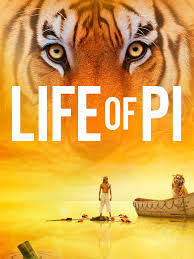
Life of Pi (2012) is an adventure-drama film directed by Ang Lee, based on Yann Martel's novel. The film stars Suraj Sharma as Pi Patel, with Irrfan Khan, Tabu, Rafe Spall, Gérard Depardieu, and Adil Hussain in supporting roles. The story follows Pi, a 16-year-old Indian boy stranded in the Pacific Ocean on a lifeboat for 227 days with a Bengal tiger named Richard Parker.
The film's development saw several directors before Ang Lee was hired, with filming taking place in India, Taiwan, and Montreal in 2011. The visual effects were handled by Rhythm & Hues Studios. It premiered at the 50th New York Film Festival and was released in the U.S. on November 21, 2012. It grossed over $609 million and received acclaim for its direction, screenplay, editing, music, sound design, effects, and cinematography. It won several awards, including four Oscars, with Ang Lee winning Best Director.
Themes
- Survival and the human spirit
- Faith and the nature of storytelling
- The coexistence of belief and reason
The film is a blend of visually stunning effects and profound storytelling, exploring the depths of human resilience and the power of narrative.
"Life of Pi" uses a storytelling technique where the narrative isn't linear. This means it doesn't follow a straight path from beginning to end. Instead, it moves back and forth between different times. At first, Pi Patel, the protagonist, tells a story about how he survived a shipwreck with a tiger named Richard Parker. However, before diving into this adventure, he talks about his parents and his early life. The film also switches between the present, where Pi recounts his tale to an author, and the past, which makes it difficult to tell what really happened and what might be imagined. The movie incorporates symbols (like the tiger and the lifeboat), religious questions, and philosophical ideas to engage viewers and provoke thought about belief, survival, and truth.
Pi tells the story of how he survived with Richard Parker but did not directly jump to that. Instead, he began by telling his parents' story. After 15 minutes, the shift occurs to the childhood story, which begins chronologically. It is at exactly 22:32 that the adventure story begins, where Pi, as an unreliable narrator, retells his story. From 35:48 to 01:48:30, the main narrative of the movie takes place. The past is made more complex through the use of montage, zooms, and wide angles. Essentially, the film employs two timelines: one from Pi's life and the other from the present, where the author is asking questions.
Slumdog Millionaire:
Slumdog Millionaire (2008) is a British drama film directed by Danny Boyle, based on Vikas Swarup's novel *Q & A*. Starring Dev Patel as Jamal Malik, the story follows an 18-year-old from the Juhu slums of Mumbai who appears on *Kaun Banega Crorepati* (the Indian version of *Who Wants to Be a Millionaire?*). Jamal surprises everyone by correctly answering every question and is accused of cheating. He recounts his life story to the police, explaining how his experiences provided him with the answers.
Themes:
- The power of destiny and fate
- Survival and resilience amidst adversity
- Love and hope transcending harsh realities
"Slumdog Millionaire" uses a frame narrative, which means it tells the main story through a different, overarching structure. In this case, the main story is set around a game show where Jamal Malik answers questions to win money. Each question he answers correctly leads to a flashback of an important moment in his life, showing how he came to know the answers. This method helps connect Jamal’s past experiences with his present situation on the game show. The movie highlights themes such as love, struggle, and destiny. It also touches on socio-political issues, including the portrayal of foreigners and the depiction of India, offering a “feel-good” narrative while reflecting on social realities.
A new level of reality and suspense is added to the story in "Slumdog Millionaire" through the police questioning frame. Jamal Malik is held and questioned by the authorities on suspicion of cheating following his unlikely run on the game program "Who Wants to Be a Millionaire?" As Jamal recounts how he knew the answers to each question, the interrogation sessions reveal his backstory through a series of flashbacks. The distrust and harsh treatment Jamal received from the police officers underscores the system's widespread violence and corruption, as well as the obstacles he has had to overcome.
This storytelling technique not only makes the tension higher but also gives Jamal's amazing adventure a more genuine feel. The questioning sequences give the story's more fantastical components a harsh, grounded context, which heightens the impact and plausibility of Jamal's eventual victory.
Maharaja:
Maharaja is a 2024 Indian Tamil-language action thriller filmdirected by Nithilan Swaminathan, who co-wrote the script with Raam Murali. A barber seeks vengeance after his home is burglarized, cryptically telling police his "lakshmi" has been taken, leaving them uncertain if it's a person or object. His quest to recover the elusive "lakshmi" unfolds. However, this film is all about "Art of editing."
"Maharaja" is an Indian Tamil film known for its complex and non-linear storytelling. It features a barber who seeks revenge after his home is robbed, with the central mystery revolving around a seemingly insignificant object—a trash can. The film jumps between different timelines and storylines, making the plot intricate and sometimes confusing. By using these non-linear techniques, it creates suspense and keeps the audience guessing. The violence depicted in the film emphasizes the antagonists' brutality, while the editing style pieces together various plot points. The final scenes tie everything together, revealing hidden connections and resolving earlier ambiguities. This style of storytelling makes the film engaging but also challenging to follow.
Past Actions:
The Burglary: The film reveals flashbacks of the barber's home being burglarized, showcasing the moments leading up to and following the theft of the "lakshmi."
Life Before the Incident: Through flashbacks, the movie depicts the barber's peaceful life before the burglary, highlighting his relationships and daily routines, providing context for his emotional turmoil.
Clues and Encounters: Past interactions and events where the barber encounters various individuals who may be connected to the burglary are shown, building the backstory and laying the groundwork for the present-day investigation.
Present Actions:
Reporting to the Police: In the present, the barber reports the burglary to the police, cryptically mentioning the loss of his "lakshmi," setting off the investigation.
The Quest for Vengeance: The barber's relentless pursuit to find those responsible for the burglary and recover his "lakshmi" unfolds in real-time, paralleling the flashbacks.
Piecing Together Clues: The present-day scenes show the barber piecing together clues, meeting with suspects, and revisiting locations tied to his past to track down the stolen "lakshmi."
-"Maharaja" uses a fragmented timeline to build suspense and complexity, with a focus on revenge and symbolic elements.
Each film uses these techniques to enhance storytelling, but "Maharaja" is the most intricate, making it the hardest to follow due to its multiple overlapping storylines and timelines.
These three movies tell complex stories in different ways. They're about surviving tough times, being strong, and the human spirit. "Life of Pi" is about faith and imagination. "Slumdog Millionaire" shows poor people chasing dreams and love. "Maharaja" is about getting even and making things right. All use clever ways to tell stories, like showing past events. They take viewers to new worlds and make them feel many emotions.
This parallel narrative structure creates a compelling and layered story, maintaining suspense and gradually uncovering the full picture of the barber's quest and the true mystery of "lakshmi."
In this segment, the narrative structure becomes clearer. The actual story starts with Shelva's past at 44:32. It begins with the burglary scene, followed by the birthday party at 01:17:17, which further propels the story before the accident. From the accident, the narrative shifts to the present with Jothi's story from 07:00 to 18:06. The focus then moves to the camp of Jothi's daughter and culminates in the climax involving rape and violence against Jothi at 01:52:58.At this point, Shelva’s story reconnects with the main plot. Prior to this, the storyline lacks clarity.
The significance of the police station visit becomes apparent at 22:08, leading to the investigation of the killing of the first member of Shelva's team, the creation of the dustbin, the exposure of Nallashiva, and the final confrontation between Maharaja and Shelva.
The key revelation at 02:15:14 is that Jothi is actually Shelva's daughter, Ammu, marking the peak of the story and leading to another flashback. The film concludes with Shelva's death. Viewed linearly, the story may seem straightforward, but its true impact lies in its non-linear storytelling
Conclusion:
All three movies—"Life of Pi," "Slumdog Millionaire," and "Maharaja"—employ non-linear narratives, but in different ways:
"Life of Pi mixes past and present, blending reality with imagination to explore deeper themes and the nature of truth.
- "Slumdog Millionaire" connects past experiences with present events through the game show format, using flashbacks to explain how Jamal’s life has led him to his current situation.

.jpg)


.jpg)